
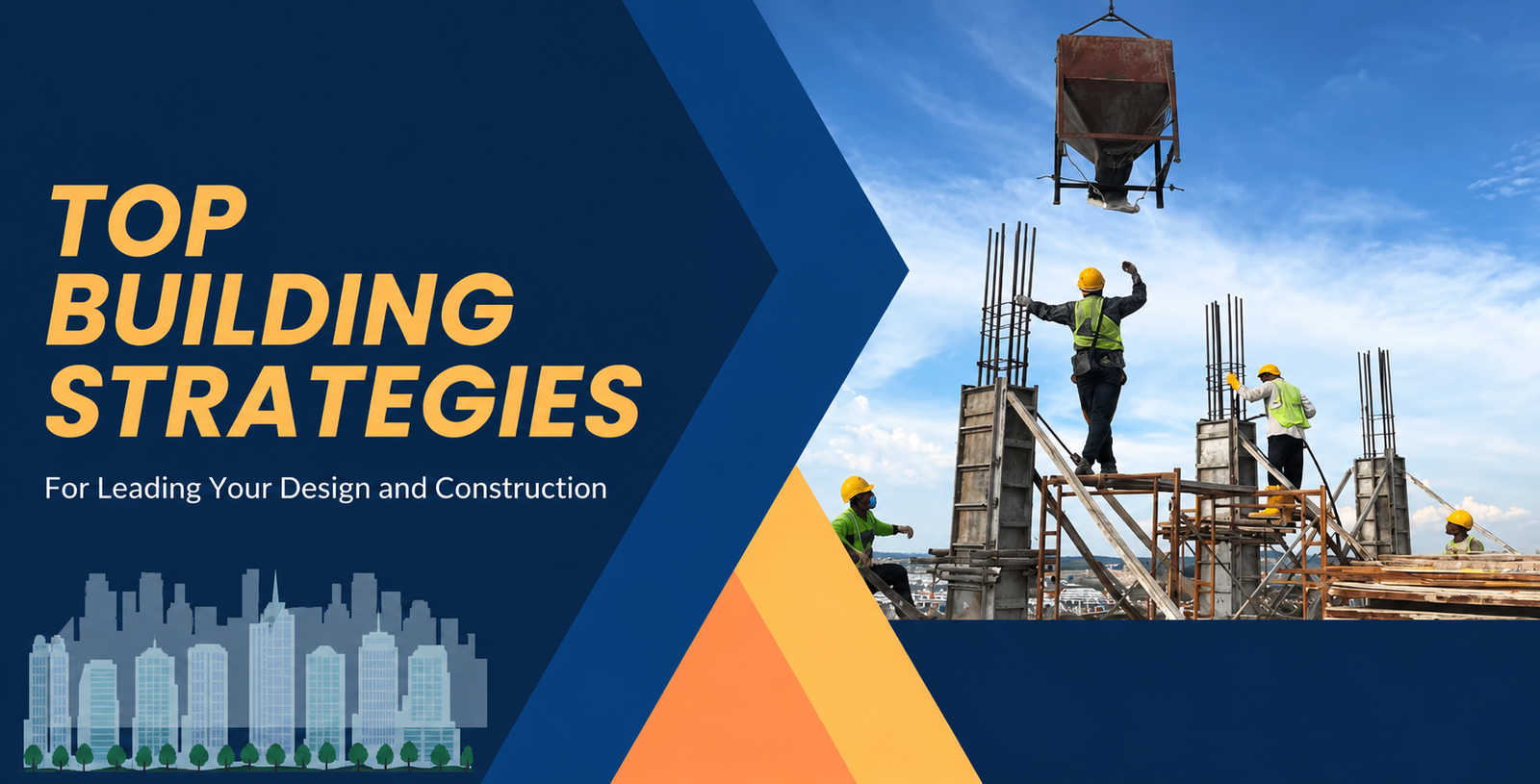
Construction Project Management: Strategies for Successful Building Projects
Successful building projects require more than a strong architectural concept or skilled construction team. They depend on effective coordination between owners, architects, engineers, contractors, consultants, suppliers, and other project stakeholders.
When these groups are not aligned, even a well-designed project can experience delays, cost overruns, coordination problems, rework, or quality issues.
This is why construction project management plays such an important role in the delivery of building projects.
Effective construction project management brings together planning, communication, budgeting, scheduling, design coordination, quality control, risk management, and construction oversight. The objective is to keep the project moving toward its required scope, schedule, budget, quality standards, and performance goals.
For projects involving complex Mechanical, Electrical, and Plumbing (MEP) systems, coordination becomes even more important. HVAC equipment, electrical distribution, plumbing systems, architectural elements, structural components, and specialty equipment must all work together within the available building space.
A well-managed project therefore requires both strong organizational processes and an understanding of the technical requirements behind the design and construction.
What Is Construction Project Management?
Construction project management is the process of planning, coordinating, monitoring, and controlling a construction project from early planning through completion.
Depending on the project, it can involve:
-
Project planning
-
Scope management
-
Scheduling
-
Budget management
-
Design coordination
-
Contractor coordination
-
MEP coordination
-
Procurement
-
Quality control
-
Risk management
-
Change management
-
Documentation
-
Inspections
-
Commissioning
-
Project closeout
The exact responsibilities vary depending on the project delivery method and the roles assigned to the owner, architect, engineer, contractor, and project manager.
Why Construction Project Management Matters
Construction projects involve many interdependent activities.
For example, an architectural change can affect:
-
HVAC layouts
-
Electrical systems
-
Plumbing
-
Structural elements
-
Equipment locations
-
Ceiling coordination
-
Project cost
-
Construction schedule
Without effective coordination, one change can create problems across several disciplines.
Construction project management provides a framework for identifying these dependencies and addressing issues before they become larger problems.
The Role of the Design and Construction Team
A building project typically involves multiple disciplines and organizations.
Depending on the project, the team may include:
-
Owner
-
Developer
-
Architect
-
MEP engineers
-
Structural engineers
-
Civil engineers
-
General contractor
-
Specialty contractors
-
Equipment suppliers
-
Consultants
-
Authorities having jurisdiction
-
Commissioning professionals
Each participant has a different responsibility.
The project manager or designated coordination team helps ensure those responsibilities remain aligned with the overall project objectives.
Establish Clear Project Goals at the Beginning
One of the most important steps in construction project management is defining project expectations before significant design and construction work begins.
The project team should establish:
-
Project scope
-
Budget
-
Schedule
-
Quality expectations
-
Design requirements
-
Performance objectives
-
Responsibilities
-
Communication procedures
-
Approval processes
Clear expectations provide a reference point for decision-making throughout the project.
Define Roles and Responsibilities
Every project participant should understand what they are responsible for.
A responsibility matrix can identify who is responsible for:
-
Design
-
Engineering
-
Procurement
-
Construction
-
Inspections
-
Approvals
-
Documentation
-
Testing
-
Commissioning
-
Closeout
Clear responsibilities reduce the risk of duplicated work or tasks being overlooked.
Establish a Project Communication Plan
Communication should be structured rather than left entirely to informal conversations.
A project communication plan can establish:
-
Meeting frequency
-
Meeting participants
-
Reporting requirements
-
Drawing-review procedures
-
RFI procedures
-
Change-notification procedures
-
Document-control requirements
-
Escalation procedures
The objective is to ensure that important information reaches the right people at the right time.
Why Communication Matters in Construction Projects
Construction information changes continuously.
Examples include:
-
Design revisions
-
Equipment changes
-
Site conditions
-
Material availability
-
Schedule changes
-
Code requirements
-
Client decisions
If one team member is working from outdated information, the resulting work may need to be corrected.
Strong communication and document control help reduce this risk.
Coordinate Designers and Builders Early
Designers and builders should not operate as completely separate groups.
Early collaboration can identify:
-
Constructability problems
-
Equipment conflicts
-
Installation constraints
-
Material requirements
-
Access issues
-
Cost implications
Early coordination is generally more effective than discovering problems after construction has started.
MEP Coordination in Construction Projects
MEP systems require particularly careful coordination because they occupy significant portions of the building’s ceiling, walls, shafts, mechanical rooms, and service spaces.
MEP coordination can involve:
-
HVAC ductwork
-
Piping
-
Electrical conduit
-
Cable trays
-
Plumbing
-
Equipment
-
Structural elements
-
Architectural ceilings
Conflicts between these systems can create costly field changes.
Why BIM Is Important for Design and Construction Coordination
Building Information Modeling (BIM) can provide a coordinated digital representation of building systems.
BIM coordination can help identify:
-
Duct clashes
-
Pipe clashes
-
Equipment conflicts
-
Structural interference
-
Ceiling-space conflicts
-
Access problems
Resolving these issues during design can reduce the likelihood of discovering them during construction.
Daymark Engineers lists BIM Services among its engineering capabilities, making BIM a relevant part of its broader coordination approach.
Develop a Realistic Construction Schedule
A project schedule should reflect actual design, procurement, permitting, and construction requirements.
Major milestones may include:
-
Concept design
-
Design development
-
Construction documents
-
Permit submission
-
Permit approval
-
Procurement
-
Mobilization
-
Construction
-
Equipment installation
-
Testing
-
Commissioning
-
Substantial completion
-
Final closeout
Each phase should account for dependencies on other activities.
Avoid Unrealistic Construction Deadlines
An aggressive schedule is not necessarily an efficient schedule.
Unrealistic deadlines can lead to:
-
Rushed design
-
Incomplete coordination
-
Procurement problems
-
Increased rework
-
Reduced quality
-
Increased overtime
-
Construction delays
A realistic schedule should include appropriate time for review, approvals, procurement, and unexpected conditions.
Use Project Milestones to Monitor Progress
Breaking a project into milestones makes progress easier to measure.
Examples include:
Design milestone → Permit milestone → Procurement milestone → Construction milestone → Commissioning milestone → Closeout milestone
Each milestone should have clearly defined deliverables and completion criteria.
Manage the Construction Budget
Budget management should continue throughout the project rather than being performed only at the beginning.
The project team should monitor:
-
Design costs
-
Construction costs
-
Material costs
-
Labor
-
Equipment
-
Change orders
-
Allowances
-
Contingencies
-
Professional services
Regular cost reviews help identify potential problems earlier.
Coordinate Design Decisions With the Budget
Design decisions can have significant cost implications.
For example, changing:
-
HVAC equipment
-
Lighting systems
-
Plumbing fixtures
-
Building materials
-
Electrical service
-
Controls
can affect both construction and operating costs.
Engineering and design decisions should therefore be evaluated in relation to the project’s overall budget and performance objectives.
Understand the Difference Between Cost and Value
The least expensive option is not always the best option.
A system should be evaluated based on:
-
Initial cost
-
Operating cost
-
Maintenance
-
Reliability
-
Expected service life
-
Energy consumption
-
Replacement requirements
This is where lifecycle thinking becomes important.
Value Engineering in Construction Projects
Value engineering evaluates alternatives to determine whether the required project function can be achieved more effectively.
Potential areas of evaluation include:
-
Equipment
-
Materials
-
HVAC systems
-
Lighting
-
Plumbing
-
Controls
-
Construction methods
Value engineering should maintain the project’s required safety, performance, quality, and code compliance.
Manage Construction Quality
Quality control should be integrated into the project rather than treated as a final inspection.
Quality management can include:
-
Drawing reviews
-
Material inspections
-
Installation inspections
-
Equipment verification
-
Testing
-
Documentation
-
Punch-list management
-
Commissioning
Early identification of defects can reduce the cost and disruption associated with correcting them later.
Design Quality Control
Quality control begins before construction.
Design reviews can identify:
-
Incomplete drawings
-
Conflicting information
-
Missing details
-
Incorrect equipment requirements
-
Coordination problems
-
Code issues
A structured design-review process can reduce downstream construction problems.
Construction Quality Control
During construction, the project team should verify that work corresponds with the approved documents.
Depending on the project, this may include reviewing:
-
Equipment installation
-
Ductwork
-
Piping
-
Electrical systems
-
Plumbing
-
Controls
-
Materials
-
Workmanship
The appropriate inspection scope depends on the project contract and responsibilities.
Manage Project Risks Early
Every construction project contains risks.
Potential risks include:
-
Unforeseen site conditions
-
Design changes
-
Material shortages
-
Labor constraints
-
Permit delays
-
Budget changes
-
Equipment lead times
-
Coordination conflicts
Risk management involves identifying potential problems, assessing their impact, and developing mitigation strategies.
Create a Construction Risk Register
A risk register can document:
-
Risk description
-
Probability
-
Potential impact
-
Responsible party
-
Mitigation strategy
-
Current status
Regularly updating the register helps the team focus on the risks that require attention.
Manage Design Changes Effectively
Changes are common in building projects.
A change may result from:
-
Owner requests
-
Existing conditions
-
Code requirements
-
Equipment availability
-
Budget changes
-
Contractor recommendations
-
Design coordination
Every significant change should be evaluated for its effect on:
-
Cost
-
Schedule
-
Design
-
Construction
-
MEP systems
-
Approvals
Use a Formal Change Management Process
A change-management process can include:
-
Identify the proposed change.
-
Determine the reason for the change.
-
Evaluate technical implications.
-
Evaluate cost implications.
-
Evaluate schedule implications.
-
Obtain required approvals.
-
Update project documents.
-
Communicate the change to affected stakeholders.
This creates a clear record of decisions.
Manage Procurement and Equipment Lead Times
Long-lead equipment can affect the construction schedule.
Potential examples include:
-
HVAC equipment
-
Electrical equipment
-
Generators
-
Transformers
-
Switchgear
-
Specialty equipment
-
Controls
Procurement planning should begin early enough to accommodate manufacturing and delivery timelines.
Coordinate Equipment With MEP Design
Equipment should be coordinated with:
-
Electrical loads
-
Plumbing connections
-
HVAC requirements
-
Structural support
-
Controls
-
Clearances
-
Maintenance access
Late equipment changes can affect several engineering disciplines simultaneously.
Monitor Construction Progress Regularly
Regular progress reviews provide an opportunity to compare actual progress with the planned schedule.
Progress meetings can review:
-
Completed work
-
Current activities
-
Upcoming milestones
-
Open issues
-
RFIs
-
Change orders
-
Procurement
-
Schedule risks
-
Quality issues
The frequency depends on project size and complexity.
Use Construction Project Management Technology
Technology can improve access to project information and reduce manual coordination.
Potential tools include:
-
BIM platforms
-
Project-management software
-
Cloud document storage
-
Digital drawing systems
-
Field-reporting tools
-
Scheduling software
-
Cost-tracking platforms
The specific platform matters less than establishing a consistent process for using it.
BIM and Construction Coordination
BIM can support collaboration between:
-
Architects
-
Engineers
-
Contractors
-
Fabricators
-
Owners
A coordinated model can help project participants understand spatial relationships before installation.
Document Control Is Essential
Construction teams may work with:
-
Drawings
-
Specifications
-
RFIs
-
Submittals
-
Change orders
-
Meeting minutes
-
Inspection reports
-
Equipment information
A controlled document system helps ensure the team is using the current information.
Track RFIs and Submittals
Requests for Information and submittals can affect both schedule and construction decisions.
A project team should track:
-
Date submitted
-
Responsible reviewer
-
Required response date
-
Actual response
-
Impact on schedule
-
Related change
Prompt review can help prevent work from being delayed.
Maintain a Positive and Professional Project Environment
Construction projects can involve significant pressure.
A productive project culture should encourage:
-
Professional communication
-
Respect
-
Accountability
-
Collaboration
-
Problem solving
-
Safety
-
Transparency
The objective is not to eliminate disagreement but to create a process for resolving disagreements constructively.
Resolve Conflicts Before They Become Project Delays
Conflicts can arise over:
-
Scope
-
Cost
-
Schedule
-
Design interpretation
-
Responsibility
-
Site conditions
Early escalation and documented resolution can prevent small disagreements from becoming major project problems.
Review Project Performance Regularly
A project should be evaluated against its objectives throughout the construction process.
Key areas include:
-
Schedule
-
Budget
-
Quality
-
Safety
-
Design coordination
-
Procurement
-
Risk
-
Change orders
Regular reviews allow the team to make adjustments before problems become difficult to correct.
Construction Project Performance Indicators
Useful project indicators may include:
Schedule
-
Planned vs. actual progress
-
Milestone completion
-
Critical-path activities
Cost
-
Budget vs. actual cost
-
Change-order value
-
Forecast final cost
Quality
-
Defects
-
Inspection findings
-
Rework
-
Punch-list items
Coordination
-
Open RFIs
-
Clash issues
-
Unresolved design questions
Procurement
-
Long-lead equipment
-
Delivery dates
-
Material availability
These indicators provide a clearer picture of project health than relying on general impressions.
Managing the Critical Path
The critical path identifies activities that directly affect the project’s completion date.
A delay to a critical-path activity can delay the overall project.
Examples may include:
-
Permit approval
-
Equipment procurement
-
Structural work
-
Mechanical installation
-
Electrical service
-
Commissioning
Critical-path activities should receive close monitoring.
Prepare for Unexpected Site Conditions
Existing buildings can contain conditions that are not fully visible during initial design.
Potential discoveries include:
-
Hidden utilities
-
Existing structural conditions
-
Undocumented piping
-
Inadequate electrical capacity
-
Existing HVAC limitations
-
Unforeseen code issues
Early site investigation can reduce surprises, but the project team should still maintain a process for responding to unforeseen conditions.
Construction Safety and Project Management
Safety is a fundamental part of construction management.
The project team should coordinate with the responsible safety professionals and contractors to ensure applicable safety requirements are addressed.
Project managers should not treat schedule or budget pressure as a reason to compromise safety requirements.
Sustainability and Construction Project Management
Sustainability can be incorporated into project decisions through:
-
Energy-efficient equipment
-
Efficient lighting
-
Water conservation
-
Building-envelope improvements
-
Renewable-energy strategies
-
Building automation
-
Lifecycle analysis
The appropriate strategies depend on the project’s goals and requirements.
Energy Efficiency During Design and Construction
Energy performance is influenced by decisions made during design.
These can include:
-
HVAC equipment
-
Building controls
-
Lighting
-
Insulation
-
Windows
-
Water heating
-
Equipment loads
Coordinating these decisions early can help the team evaluate both initial and long-term costs.
Commissioning Before Project Closeout
Commissioning helps verify that building systems operate according to the intended design.
Depending on project scope, commissioning can evaluate:
-
HVAC systems
-
Controls
-
Sensors
-
Equipment
-
Sequences
-
Performance
It can provide an additional layer of verification before the building is fully occupied.
Project Closeout and Documentation
The project does not end when construction appears complete.
Closeout may include:
-
Punch-list completion
-
Final inspections
-
Testing
-
Commissioning
-
As-built documentation
-
Operation and maintenance manuals
-
Warranties
-
Training
-
Final approvals
A well-organized closeout helps the owner transition from construction into building operation.
Lessons Learned After Project Completion
A completed project provides useful information for future work.
A lessons-learned review can examine:
-
What worked well
-
What caused delays
-
Which design issues occurred
-
Which coordination problems occurred
-
What procurement issues emerged
-
Which systems performed as expected
For organizations completing multiple projects, these lessons can improve future planning.
Common Construction Project Management Mistakes
Starting Without Clearly Defined Responsibilities
Unclear roles can lead to duplicated or missed work.
Using Unrealistic Schedules
Overly aggressive schedules can create pressure and rework.
Failing to Coordinate Design and Construction
Late coordination can result in field conflicts.
Treating Budget Management as a One-Time Exercise
Costs can change throughout the project.
Ignoring Long-Lead Equipment
Late procurement can delay installation and project completion.
Poor Document Control
Outdated drawings can result in incorrect construction.
Delaying Change Decisions
Unresolved changes can disrupt construction.
Ignoring Quality Until the End
Late defect discovery can increase rework.
Failing to Track Risks
Unmanaged risks can become expensive project problems.
Not Reviewing Lessons Learned
Repeated mistakes can continue across future projects.
A Practical Construction Project Management Process
Step 1: Define the Project
Establish:
-
Scope
-
Budget
-
Schedule
-
Quality requirements
-
Performance goals
Step 2: Establish the Project Team
Identify responsibilities for:
-
Owner
-
Architect
-
Engineers
-
Contractors
-
Consultants
Step 3: Develop the Design
Coordinate architectural, structural, MEP, and specialty systems.
Step 4: Review the Design
Perform interdisciplinary and constructability reviews.
Step 5: Establish the Construction Schedule
Define milestones, dependencies, and critical-path activities.
Step 6: Develop the Procurement Strategy
Identify long-lead equipment and materials.
Step 7: Begin Construction
Monitor progress, quality, coordination, and safety.
Step 8: Manage Changes
Evaluate cost, schedule, and technical implications.
Step 9: Track Performance
Monitor schedule, budget, quality, procurement, and risks.
Step 10: Commission and Test Systems
Verify building-system performance where applicable.
Step 11: Complete Closeout
Finalize documentation, inspections, training, and approvals.
Step 12: Capture Lessons Learned
Use project experience to improve future work.
Construction Project Management Checklist
Planning
-
Project scope defined
-
Budget established
-
Schedule established
-
Roles assigned
-
Communication plan created
Design
-
Architectural coordination completed
-
Structural coordination completed
-
MEP coordination completed
-
Equipment requirements documented
-
Code requirements reviewed
Construction
-
Contractor coordination established
-
Procurement tracked
-
Long-lead equipment identified
-
Quality inspections scheduled
-
RFIs tracked
Cost
-
Budget monitored
-
Change orders tracked
-
Forecast updated
-
Contingency monitored
Schedule
-
Milestones tracked
-
Critical path monitored
-
Delays documented
-
Recovery strategies developed where necessary
Quality
-
Design reviews completed
-
Material inspections performed
-
Installation reviewed
-
Testing completed
-
Punch list managed
Closeout
-
Final inspections completed
-
Commissioning completed where applicable
-
As-builts received
-
O&M documentation received
-
Training completed
-
Warranties documented
How MEP Engineering Supports Construction Project Success
MEP engineering is closely connected to construction coordination.
A well-developed MEP design can provide:
-
Proper equipment sizing
-
Coordinated layouts
-
Accurate load calculations
-
Clear installation requirements
-
Equipment schedules
-
Controls requirements
-
Energy-performance considerations
Poorly coordinated MEP documentation can create construction conflicts, field changes, and delays.
The Importance of Early MEP Coordination
MEP systems often require significant space within a building.
Early coordination helps determine:
-
Mechanical-room requirements
-
Electrical-room requirements
-
Ceiling-space requirements
-
Shaft sizes
-
Equipment clearances
-
Pipe routes
-
Duct routes
-
Electrical pathways
These decisions can influence architectural and structural layouts.
BIM for MEP Construction Coordination
BIM can provide a coordinated environment for reviewing MEP systems before installation.
Potential benefits include:
-
Clash detection
-
Equipment coordination
-
Spatial planning
-
Improved visualization
-
Better interdisciplinary communication
The specific benefits depend on the project’s BIM scope and implementation.
Engineering Review During Construction
Engineering support may continue after construction documents are issued.
Depending on the contract, this may include:
-
RFI responses
-
Submittal review
-
Drawing revisions
-
Site observations
-
Equipment review
-
Coordination support
These services can help maintain alignment between the design intent and field conditions.
Construction Administration and Engineering Support
Construction administration can help bridge the gap between design and construction.
The appropriate scope may include:
-
Reviewing submittals
-
Responding to RFIs
-
Reviewing proposed substitutions
-
Observing installation
-
Supporting testing
-
Reviewing closeout documentation
Responsibilities should be clearly defined in the project agreement.
Why Technical Coordination and Project Management Must Work Together
A construction project can have excellent project management and still experience technical problems.
It can also have excellent engineering and still suffer from poor scheduling or communication.
Successful projects require both.
The project-management process keeps the work organized.
Technical coordination ensures that the work itself is properly integrated.
Building a More Predictable Construction Process
No construction project is completely predictable.
However, the project team can improve predictability by:
-
Defining scope early
-
Coordinating disciplines
-
Tracking risks
-
Monitoring the budget
-
Maintaining realistic schedules
-
Managing changes
-
Reviewing quality
-
Tracking procurement
-
Using current documentation
The goal is not to eliminate every uncertainty but to identify and manage it before it becomes a major problem.
Leading a Design and Construction Team Toward Project Success
Successful construction project management is ultimately about creating alignment.
The owner needs the project to meet its business objectives.
The architect needs the design intent to be maintained.
The engineers need the building systems to perform as designed.
The contractor needs coordinated documents and timely decisions.
The project manager needs reliable information about schedule, cost, quality, and risks.
When these responsibilities are connected through a structured management and coordination process, the project has a stronger foundation for successful delivery.
Daymark Engineers provides MEP-FP engineering, BIM Services, Energy Modeling, Value Engineering, Peer Review, Drafting Services, Inspections, Commissioning, and related engineering support for commercial, residential, franchise, restaurant, healthcare, and other building projects.
Its engineering services can support projects from design coordination through construction-related engineering activities, helping owners and project teams address MEP requirements, coordination issues, energy considerations, and building-system performance.
Planning a building project and need coordinated MEP engineering support? Daymark Engineers can help integrate mechanical, electrical, plumbing, fire protection, BIM, energy, and related engineering requirements into a coordinated project strategy.
Frequently Asked Questions About Construction Project Management
What Is Construction Project Management?
Construction project management is the process of planning, coordinating, monitoring, and controlling a construction project to achieve its scope, schedule, budget, quality, and performance objectives.
Why Is Construction Project Management Important?
It helps coordinate the many people, disciplines, decisions, materials, and activities involved in a building project while identifying and managing schedule, cost, quality, and technical risks.
What Are the Main Responsibilities of a Construction Project Manager?
Responsibilities vary by project, but may include:
-
Planning
-
Scheduling
-
Budget monitoring
-
Team coordination
-
Risk management
-
Change management
-
Quality management
-
Procurement coordination
-
Documentation
-
Progress tracking
What Is the Difference Between Construction Management and Project Management?
Construction management generally focuses heavily on the execution and coordination of construction activities, while project management can encompass the broader project lifecycle, including planning, design, procurement, construction, and closeout. Exact responsibilities depend on the project delivery structure.
Who Is Part of a Construction Project Team?
A project team can include the owner, developer, architect, engineers, general contractor, specialty contractors, consultants, suppliers, commissioning professionals, and other stakeholders.
Why Is Communication Important in Construction Projects?
Construction projects involve continuous changes to design, procurement, site conditions, schedule, and scope. Clear communication helps ensure that the correct information reaches the appropriate project participants.
How Can Construction Delays Be Reduced?
Potential strategies include realistic scheduling, early design coordination, procurement planning, risk management, prompt decision-making, document control, and regular progress monitoring.
What Causes Construction Delays?
Common causes include:
-
Design changes
-
Permit delays
-
Procurement problems
-
Long-lead equipment
-
Unforeseen site conditions
-
Coordination conflicts
-
Labor constraints
-
Late decisions
How Important Is Budget Management in Construction?
Budget management is critical because project costs can change throughout design and construction. Regular cost tracking and change management help maintain financial control.
What Is Construction Change Management?
Change management is the process of identifying, evaluating, approving, documenting, and implementing changes to project scope, design, cost, or schedule.
Why Is MEP Coordination Important?
MEP systems occupy significant building space and interact with architectural and structural elements. Coordination can help identify conflicts before construction.
What Is BIM Coordination?
BIM coordination uses a digital building model to coordinate architectural, structural, mechanical, electrical, plumbing, and other systems and identify potential conflicts.
Can BIM Reduce Construction Problems?
BIM can help identify spatial and coordination conflicts before installation. Its effectiveness depends on the quality of the model, coordination process, and project implementation.
What Is Construction Quality Control?
Construction quality control involves processes used to verify that materials, workmanship, installations, and completed systems meet the project’s requirements.
When Should Quality Control Begin?
Quality control should begin during design and continue throughout construction, testing, commissioning, and closeout.
What Is a Construction Risk Register?
A risk register documents potential project risks, their probability and impact, responsible parties, mitigation measures, and current status.
Why Is Procurement Planning Important?
Long-lead equipment and materials can affect the construction schedule. Early procurement planning can help identify potential delivery risks.
What Are Long-Lead Construction Items?
Depending on the project, long-lead items may include:
-
HVAC equipment
-
Electrical equipment
-
Generators
-
Transformers
-
Switchgear
-
Specialty equipment
-
Controls
What Is the Critical Path in Construction?
The critical path consists of activities that directly influence the project’s overall completion date. Delays to critical-path activities can delay the project.
How Often Should Construction Progress Be Reviewed?
The appropriate frequency depends on project size and complexity. Weekly or bi-weekly reviews are common approaches, but larger or more complex projects may require more frequent coordination.
How Does Technology Improve Construction Project Management?
Technology can improve access to project information, document control, scheduling, BIM coordination, cost tracking, field reporting, and communication.
What Is Construction Document Control?
Document control is the process of managing drawings, specifications, RFIs, submittals, revisions, meeting records, and other project information so that the team uses current and approved information.
What Is Construction Commissioning?
Commissioning is a structured process used to verify that building systems operate according to their intended design and performance requirements.
Why Is Commissioning Important?
It can identify problems with equipment, controls, sensors, sequences, and system operation before or during building occupancy.
What Happens During Project Closeout?
Closeout may include final inspections, punch-list completion, commissioning, testing, as-built documentation, operation and maintenance manuals, training, warranties, and final approvals.
How Can Lessons Learned Improve Future Construction Projects?
A post-project review can identify recurring design, coordination, procurement, scheduling, or construction issues so that future projects can avoid similar problems.
How Does MEP Engineering Support Construction Management?
MEP engineering provides the technical design, calculations, equipment requirements, coordinated drawings, specifications, and engineering support needed to integrate building systems into construction.
When Should MEP Engineers Be Involved?
MEP engineers should ideally be involved early enough to establish system requirements, equipment spaces, utility needs, loads, and coordination requirements before the design becomes difficult to change.
Can MEP Engineering Reduce Construction Costs?
Proper engineering can help reduce avoidable costs through coordination, appropriate equipment selection, constructability review, value engineering, and reduced rework. Cost reductions should not compromise required performance or code compliance.
What Is Value Engineering?
Value engineering evaluates alternatives to determine whether required project functions can be achieved at an appropriate overall cost while maintaining performance, safety, quality, and compliance.
Does Daymark Engineers Provide BIM Services?
Yes. BIM Services are among Daymark Engineers’ listed capabilities and can support coordination of building systems.
Does Daymark Engineers Provide Energy Modeling?
Yes. Energy Modeling is listed among Daymark’s engineering capabilities and can support evaluation of building energy performance.
Does Daymark Engineers Provide Commissioning?
Yes. Commissioning is among Daymark’s listed building-system services.
Can Daymark Engineers Support Construction-Phase Engineering?
Depending on project scope, Daymark can provide engineering-related support such as coordination, inspections, review, and other construction-related services.
What Types of Projects Does Daymark Engineers Work On?
Daymark’s project and service portfolio includes commercial, residential, franchise, restaurant, healthcare, and other building projects.
How Can I Get MEP Engineering Support for My Construction Project?
Project owners, developers, architects, and project teams can contact Daymark Engineers to discuss MEP-FP engineering, BIM, energy modeling, value engineering, commissioning, inspections, and related building-system engineering requirements.

No comment