
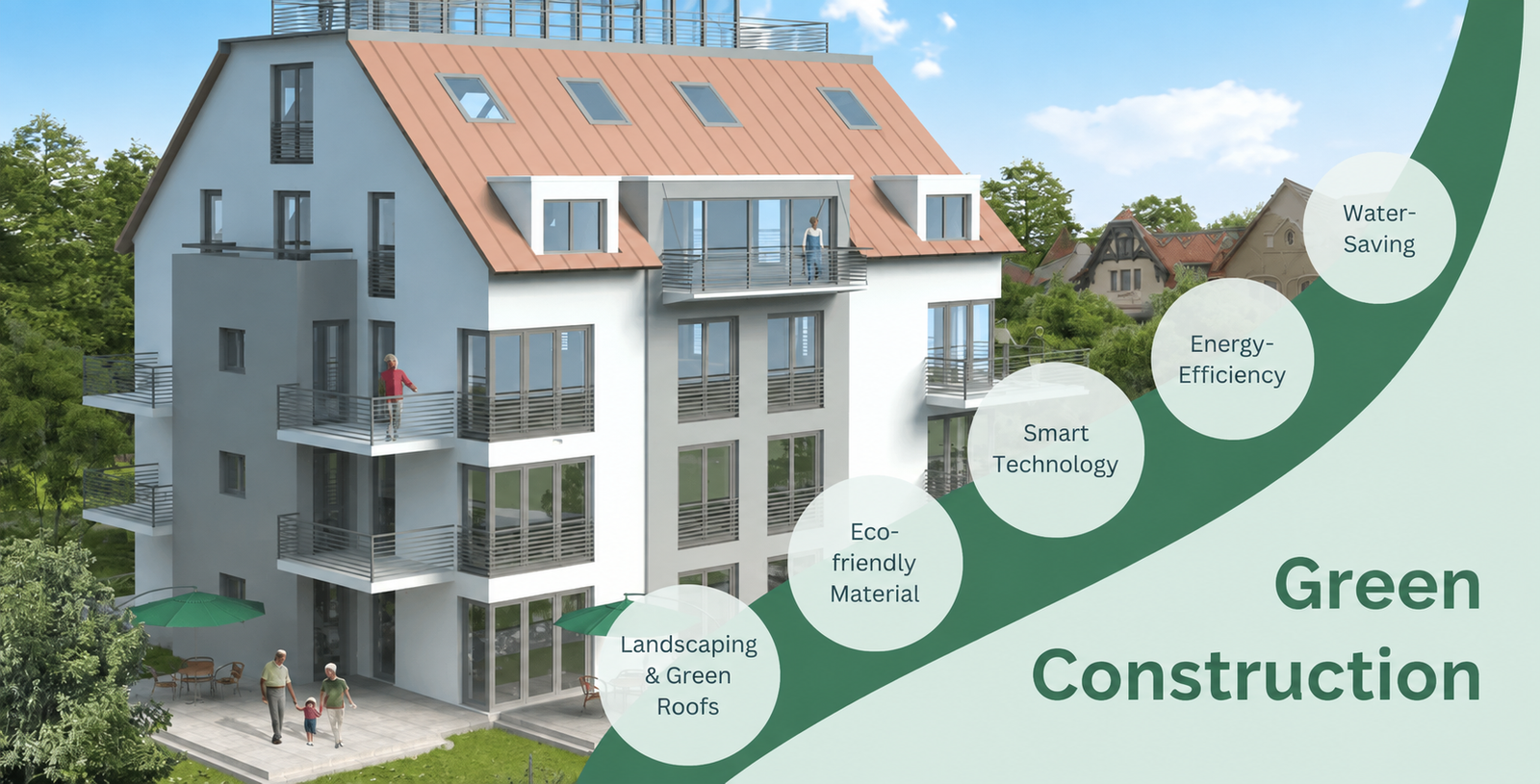
Green Construction Practices: How to Build Sustainably
Green construction practices are changing how buildings are designed, constructed, renovated, and operated. As energy costs, resource consumption, environmental concerns, and building-performance expectations continue to grow, architects, owners, contractors, and engineers are placing greater emphasis on sustainable construction.
But going green is not simply about installing solar panels or selecting recycled materials.
A successful green construction strategy considers the building as a complete system. It can address energy efficiency, water conservation, sustainable materials, indoor environmental quality, waste reduction, renewable energy, building controls, site planning, and long-term operation.
The goal is to create a building that uses resources efficiently, provides a comfortable and healthy environment for occupants, performs reliably, and delivers appropriate long-term value.
What Is Green Construction?
Green construction is the process of planning, designing, constructing, renovating, and operating buildings with greater consideration for environmental impact, resource efficiency, occupant comfort, and long-term building performance.
The U.S. Environmental Protection Agency describes green building as an approach that considers environmental responsibility and resource efficiency throughout a building’s lifecycle, including siting, design, construction, operation, maintenance, renovation, and deconstruction.
Green construction can apply to:
-
New commercial buildings
-
Residential buildings
-
Industrial facilities
-
Retail buildings
-
Restaurants
-
Institutional facilities
-
Renovations
-
Building additions
-
Existing-building upgrades
The exact strategies will depend on the project’s location, climate, building type, budget, occupancy, energy goals, and operational requirements.
Why Are Green Construction Practices Important?
Buildings use substantial amounts of energy, water, materials, and other resources throughout their lifecycle.
Well-planned green construction practices can help project teams address several objectives at the same time.
Reduce Energy Consumption
Energy-efficient HVAC systems, lighting, controls, building envelopes, and equipment can help reduce unnecessary energy use.
Conserve Water
Efficient plumbing fixtures, water management, irrigation strategies, and appropriate water reuse systems can help reduce potable-water consumption.
Reduce Construction Waste
Material planning, reuse, recycling, and responsible disposal can reduce the amount of construction waste sent to landfills.
Improve Indoor Environmental Quality
Ventilation, filtration, moisture control, daylighting, thermal comfort, and material selection can contribute to a better indoor environment. EPA and USGBC both identify indoor environmental quality as an important part of sustainable building design.
Improve Long-Term Building Performance
Sustainable construction should consider how the building will operate and be maintained after construction is complete.
This is why green construction should be viewed as a lifecycle approach, rather than a collection of individual environmentally friendly products.
10 Green Construction Practices for Sustainable Buildings
The following green construction practices can help architects, owners, contractors, and engineers develop more sustainable building projects.
1. Design for Energy Efficiency
Energy efficiency should be considered from the earliest stages of building design.
A building’s energy performance can be influenced by:
-
Building orientation
-
Building envelope
-
Insulation
-
Windows and glazing
-
HVAC systems
-
Lighting
-
Controls
-
Equipment
-
Occupancy
-
Operating schedules
Use Efficient HVAC Systems
Heating, ventilation, and air-conditioning systems can have a significant effect on building energy consumption.
Depending on the project, engineers may evaluate:
-
High-efficiency HVAC equipment
-
Heat pumps
-
Variable-speed equipment
-
Energy recovery
-
Efficient air distribution
-
HVAC zoning
-
Smart controls
-
Building automation
The most efficient equipment is not automatically the best choice. HVAC systems should be properly sized and selected according to the building’s loads, climate, operating conditions, maintenance requirements, and project objectives.
Improve the Building Envelope
The building envelope separates conditioned interior space from the outdoor environment.
Insulation, windows, doors, air sealing, roofing, and solar-control strategies can influence heating and cooling loads.
Improving the envelope can therefore reduce the burden placed on mechanical systems.
Use Efficient Lighting
Lighting can combine energy efficiency with occupant comfort.
Strategies may include:
-
LED lighting
-
Occupancy sensors
-
Daylight-responsive controls
-
Dimming
-
Automated scheduling
-
Lighting management systems
The appropriate strategy depends on the building’s use and lighting requirements.
2. Choose Sustainable Building Materials
Material selection is an important part of green construction.
Instead of evaluating a material only by its initial price, project teams can consider:
-
Durability
-
Recycled content
-
Reuse potential
-
Responsible sourcing
-
Manufacturing impacts
-
Transportation
-
Maintenance requirements
-
Indoor emissions
-
Expected service life
-
End-of-life considerations
Potential material strategies include:
-
Reclaimed materials
-
Recycled-content materials
-
Responsibly sourced wood
-
Durable finishes
-
Low-emitting products
-
Materials with environmental product information
The right material should be selected based on the project’s performance requirements rather than marketing claims alone.
3. Integrate Renewable Energy Where Appropriate
Renewable energy can be incorporated into a building when the site, building design, economics, and electrical infrastructure support it.
Solar photovoltaic systems are one of the most common options.
Before incorporating a renewable-energy system, engineers should consider:
-
Available roof or site area
-
Solar exposure
-
Electrical loads
-
Utility requirements
-
Structural considerations
-
Energy goals
-
Installation requirements
-
Maintenance
-
Project economics
Renewable energy is one part of sustainable building design. It should be considered alongside energy efficiency rather than used as a substitute for efficient building systems.
4. Design Water-Efficient Plumbing Systems
Water conservation is another important component of green construction.
Buildings can reduce unnecessary water consumption through properly designed plumbing systems and efficient fixtures.
Potential strategies include:
-
Low-flow faucets
-
Water-efficient toilets
-
Sensor-operated fixtures
-
Efficient shower fixtures
-
Efficient irrigation
-
Leak detection
-
Water metering
-
Rainwater management
-
Appropriate water-reuse systems
For larger projects, engineers should also evaluate water demand, pipe sizing, pressure requirements, hot-water distribution, and equipment requirements.
A water-efficient building should still provide reliable service and meet applicable plumbing and health requirements.
5. Use Smart Building Controls
Smart technology can help buildings respond to actual operating conditions.
Depending on the project, controls can monitor and manage:
-
HVAC systems
-
Temperature
-
Humidity
-
Lighting
-
Occupancy
-
Equipment operation
-
Energy consumption
-
Water use
-
Operating schedules
Building automation can allow operators to identify unusual operating conditions and adjust systems according to building requirements.
However, smart technology should have a clear purpose.
Adding unnecessary controls can increase system complexity, installation costs, and maintenance requirements without providing meaningful benefits.
6. Improve Indoor Environmental Quality
A sustainable building should not focus only on energy and resource conservation.
It should also provide an appropriate indoor environment for occupants.
Important considerations include:
-
Ventilation
-
Filtration
-
Thermal comfort
-
Humidity
-
Daylighting
-
Acoustic comfort
-
Moisture management
-
Material emissions
-
Indoor air quality
Energy efficiency and indoor environmental quality should be considered together.
For example, improving building airtightness can reduce unwanted air leakage, but the design must still provide appropriate ventilation. EPA specifically notes that ventilation is an important part of building energy and indoor-air-quality strategies.
7. Reduce Construction Waste
Construction can generate significant quantities of material waste.
Green construction practices can address waste through:
-
Accurate material estimation
-
Reuse of existing materials
-
Recycling
-
Prefabrication
-
Modular construction
-
Careful material storage
-
Responsible demolition
-
Construction waste-management planning
Waste reduction should begin during design.
Better coordination and accurate material planning can reduce unnecessary orders, rework, damage, and disposal.
8. Consider Green Roofs and Sustainable Landscaping
The building site can also contribute to sustainability goals.
Depending on the project, strategies may include:
-
Green roofs
-
Native plants
-
Drought-tolerant landscaping
-
Rain gardens
-
Permeable surfaces
-
Stormwater management
-
Reduced irrigation requirements
Green roofs and landscaping should be evaluated based on climate, structural requirements, maintenance, water availability, and project objectives.
They should not be added simply because they appear sustainable.
9. Use BIM for Sustainable Construction Coordination
Building Information Modeling (BIM) can support green construction by improving coordination between architectural, structural, mechanical, electrical, and plumbing systems.
BIM can help project teams identify:
-
Duct conflicts
-
Pipe conflicts
-
Equipment clearance issues
-
Ceiling congestion
-
Service-access problems
-
Coordination errors
Better coordination can reduce rework and help project teams make more informed decisions before construction.
BIM can also support energy analysis, equipment coordination, quantity takeoffs, documentation, and facility information depending on the project workflow.
10. Plan for Long-Term Building Performance
A green building should continue performing after construction is complete.
This means sustainability should include:
-
Commissioning
-
Preventive maintenance
-
Energy monitoring
-
Water monitoring
-
Equipment maintenance
-
Controls optimization
-
Performance verification
-
Building operator training
A highly efficient system that is poorly maintained may not deliver the performance expected during design.
Long-term building performance should therefore be considered from the beginning of the project.
Green Construction and MEP Engineering
MEP engineering plays a major role in sustainable construction because mechanical, electrical, and plumbing systems directly affect energy use, water consumption, indoor comfort, and building operation.
Mechanical Engineering
Mechanical engineers can contribute to:
-
HVAC load calculations
-
Heating and cooling systems
-
Ventilation
-
Equipment selection
-
Energy recovery
-
Controls
-
Building automation
-
Energy modeling
Electrical Engineering
Electrical engineers can address:
-
Electrical distribution
-
Lighting
-
Equipment loads
-
Renewable-energy integration
-
Energy monitoring
-
Emergency power
-
Controls
Plumbing Engineering
Plumbing engineers can address:
-
Water demand
-
Efficient fixtures
-
Domestic water distribution
-
Hot-water systems
-
Drainage
-
Water reuse
-
Leak detection
These disciplines should be coordinated rather than designed independently.
For example, HVAC equipment affects electrical loads, plumbing systems require architectural and structural coordination, and building controls may connect HVAC and electrical systems.
Green Building Design vs. Green Construction
Green building design and green construction are closely related but are not exactly the same.
Green building design focuses on decisions made during planning and design, such as:
-
Building orientation
-
Envelope performance
-
HVAC design
-
Electrical systems
-
Plumbing
-
Lighting
-
Materials
-
Renewable energy
-
Water efficiency
Green construction includes how those designs are actually implemented.
This can involve:
-
Construction waste management
-
Material handling
-
Responsible sourcing
-
Indoor-air-quality protection during construction
-
Efficient construction practices
-
Coordination
-
Reuse and recycling
-
Commissioning
A sustainable project needs both good design and responsible implementation.
Green Construction for New Buildings
New construction provides an opportunity to incorporate sustainability from the beginning.
Green strategies can be integrated into:
-
Site planning
-
Building orientation
-
Building envelope
-
HVAC
-
Electrical
-
Plumbing
-
Lighting
-
Renewable energy
-
Materials
-
Water management
-
Controls
Early decisions can affect many later design choices.
For example, building orientation can influence solar exposure and heating and cooling requirements, while envelope decisions can affect HVAC sizing.
This is why sustainability should be addressed before major design decisions have already been finalized.
Green Construction for Existing Buildings and Renovations
Sustainable construction is not limited to new buildings.
Existing buildings can often benefit from targeted upgrades.
Potential improvements include:
-
HVAC replacement
-
Lighting upgrades
-
Smart controls
-
Building automation
-
Insulation improvements
-
Window upgrades
-
Water-efficient fixtures
-
Solar installations
-
Energy monitoring
-
Equipment replacement
Before selecting improvements, the existing building should be assessed.
This may include reviewing:
-
Existing HVAC systems
-
Electrical service
-
Plumbing infrastructure
-
Building envelope
-
Windows
-
Roof
-
Controls
-
Available mechanical space
-
Utility capacity
A phased approach may be more practical than replacing every building system at once.
Green Construction for Commercial Buildings
Commercial buildings often have substantial energy and water requirements, making integrated sustainability strategies particularly important.
Potential strategies include:
-
High-efficiency HVAC
-
HVAC zoning
-
Building automation
-
Efficient lighting
-
Energy monitoring
-
Water-efficient plumbing
-
Renewable energy
-
Sustainable materials
-
Improved indoor air quality
Operating schedules and occupancy patterns should be considered when developing these systems.
Green Construction for Residential Buildings
Residential projects can incorporate green construction practices through:
-
Efficient HVAC
-
Heat pumps
-
High-performance insulation
-
Efficient windows
-
Water-saving fixtures
-
Efficient lighting
-
Smart thermostats
-
Solar energy
-
Low-emitting materials
The appropriate combination depends on the home’s location, climate, size, occupancy, budget, and owner’s goals.
Green Construction for Industrial Buildings
Industrial buildings may have significantly different sustainability requirements.
Depending on the facility, engineers may need to consider:
-
Process loads
-
Specialized ventilation
-
High-capacity electrical systems
-
Equipment loads
-
Process utilities
-
Waste heat
-
Water demand
-
Indoor environmental conditions
Industrial sustainability strategies should be developed around actual process requirements rather than applying a generic green-building checklist.
How to Make Your Next Building Project More Sustainable
If you want to incorporate green construction practices into a project, use a structured process.
Step 1: Define Sustainability Goals
Determine what the project is trying to achieve.
Possible goals include:
-
Lower energy consumption
-
Lower water consumption
-
Improved indoor environmental quality
-
Reduced construction waste
-
Renewable energy integration
-
LEED certification
-
Improved operational performance
Step 2: Establish a Baseline
For an existing building, collect information about:
-
Energy use
-
Water consumption
-
Existing equipment
-
Operating schedules
-
Utility costs
-
Maintenance requirements
For new construction, establish baseline assumptions during design.
Step 3: Assess the Site and Building
Consider:
-
Climate
-
Solar exposure
-
Orientation
-
Existing infrastructure
-
Available space
-
Utility connections
-
Stormwater
-
Transportation
-
Site conditions
Step 4: Evaluate Building Systems
Review:
-
HVAC
-
Electrical
-
Lighting
-
Plumbing
-
Controls
-
Building envelope
-
Equipment
Step 5: Compare Sustainable Alternatives
Evaluate options based on:
-
Initial cost
-
Energy performance
-
Water savings
-
Maintenance
-
Constructability
-
Lifecycle cost
-
Reliability
-
Project schedule
Step 6: Coordinate the Design
Use multidisciplinary coordination and BIM where appropriate to reduce conflicts and identify design issues before construction.
Step 7: Plan Construction
Establish requirements for:
-
Waste management
-
Material storage
-
Indoor-air-quality protection
-
Recycling
-
Material sourcing
-
Construction coordination
Step 8: Commission Building Systems
Commissioning can help verify that major building systems operate according to the design intent.
Step 9: Monitor Performance
After occupancy, monitor relevant energy, water, and system-performance information to determine whether the project is meeting its goals.
Common Green Construction Mistakes to Avoid
Green construction can become ineffective when sustainability is treated as a collection of disconnected features.
Adding Green Features Too Late
Late changes can be more expensive and may conflict with existing design decisions.
Focusing Only on Solar Panels
Renewable energy is only one part of a sustainable building.
Energy efficiency should be addressed first.
Ignoring the Building Envelope
Poor insulation, air leakage, windows, and solar gain can increase HVAC requirements.
Selecting Equipment Based Only on Efficiency Ratings
An efficient piece of equipment can still perform poorly if it is improperly sized or poorly integrated into the building.
Choosing Materials Based Only on Marketing Claims
Sustainable materials should be evaluated using relevant performance and lifecycle information.
Ignoring Maintenance
Systems need to be accessible, serviceable, and maintainable.
Overusing Smart Technology
Technology should solve a genuine building-performance or operational problem.
Ignoring Indoor Air Quality
Energy efficiency should not come at the expense of appropriate ventilation and indoor environmental quality.
Failing to Measure Performance
Without monitoring, it can be difficult to determine whether sustainability goals are being achieved.
Is LEED Certification Required for Green Construction?
No.
A project can incorporate green construction practices without pursuing LEED certification.
LEED is a voluntary green-building rating system that provides a framework for evaluating areas such as energy, water, materials, indoor environmental quality, and other sustainability considerations. Current LEED guidance covers multiple building types and project phases.
If a project is pursuing LEED certification, the project team must select the applicable rating system and meet its prerequisites and credit requirements.
Certification and sustainable design are therefore related, but they are not the same thing.
How Much Does Green Construction Cost?
There is no single cost for green construction.
The financial impact depends on:
-
Building type
-
Project size
-
Location
-
Design stage
-
Sustainability goals
-
Equipment selection
-
Material selection
-
Renewable-energy systems
-
Building envelope
-
Certification requirements
-
Labor and material costs
Some sustainable strategies can require additional upfront investment, while others may have limited additional cost.
The better approach is to evaluate sustainability measures based on initial cost, operating cost, maintenance, performance, and lifecycle value.
How MEP Engineering Can Improve Green Construction
MEP engineers can help translate sustainability goals into practical building systems.
Depending on the project, engineering services can include:
-
HVAC design
-
Electrical design
-
Plumbing design
-
Energy modeling
-
BIM coordination
-
Equipment selection
-
Building controls
-
Value engineering
-
Commissioning support
Daymark Engineers provides MEP-FP engineering, BIM services, energy modeling, and value engineering capabilities that can support projects incorporating sustainable building strategies.
The engineering team’s role is to determine which systems and strategies are appropriate for the specific building rather than simply adding as many sustainable technologies as possible.
Green Construction Checklist
Use this checklist when planning your next sustainable building project.
Site
-
Climate evaluated
-
Site conditions assessed
-
Solar exposure considered
-
Stormwater considered
-
Landscaping strategy developed
Building Envelope
-
Insulation evaluated
-
Windows evaluated
-
Air leakage considered
-
Solar gain considered
-
Roof performance evaluated
HVAC
-
Heating and cooling loads calculated
-
Efficient equipment evaluated
-
HVAC zoning considered
-
Ventilation addressed
-
Controls considered
-
Energy recovery evaluated where appropriate
Electrical
-
Electrical loads calculated
-
Efficient lighting evaluated
-
Lighting controls considered
-
Renewable energy evaluated
-
Energy monitoring considered
Plumbing
-
Water demand calculated
-
Efficient fixtures considered
-
Hot-water system evaluated
-
Water reuse evaluated where appropriate
-
Leak detection considered
Materials
-
Durable materials considered
-
Recycled/reused materials evaluated
-
Responsible sourcing considered
-
Low-emitting products evaluated
-
Construction waste planned
Indoor Environment
-
Ventilation addressed
-
Filtration considered
-
Thermal comfort considered
-
Daylighting evaluated
-
Moisture control addressed
Construction and Operations
-
Construction waste plan established
-
Material storage planned
-
Indoor-air-quality protection considered
-
Commissioning planned
-
Maintenance requirements documented
-
Performance monitoring considered
The Future of Green Construction
Green construction is moving toward a more integrated approach to building performance.
Rather than treating sustainability as a list of individual technologies, project teams are increasingly considering the relationship between:
-
Energy
-
Water
-
Materials
-
Indoor environmental quality
-
Building systems
-
Site
-
Operations
-
Resilience
-
Lifecycle performance
Emerging strategies may include building electrification, advanced heat pumps, energy storage, renewable energy, smart controls, performance monitoring, low-carbon materials, and more advanced building-performance analysis.
The most appropriate technology will depend on the project.
A sustainable building does not need to use every new technology available. It needs to use the right technologies and design strategies for its location, occupants, budget, building type, and long-term objectives.
Frequently Asked Questions About Green Construction Practices
What are green construction practices?
Green construction practices are methods used to design, construct, renovate, and operate buildings with greater attention to energy efficiency, water conservation, sustainable materials, indoor environmental quality, waste reduction, and long-term building performance.
What are the main green construction practices?
Common green construction practices include energy-efficient HVAC, efficient lighting, water-saving plumbing, sustainable materials, renewable energy, smart controls, construction-waste reduction, sustainable landscaping, BIM coordination, and building-performance monitoring.
What is the difference between green construction and green building?
Green building is a broader lifecycle approach covering the planning, design, construction, operation, maintenance, renovation, and eventual deconstruction of a building. Green construction focuses more specifically on how sustainable principles are applied during the construction process.
How can I make my next building project green?
Start by defining sustainability goals early. Then evaluate the site, building envelope, HVAC, electrical, plumbing, lighting, materials, water use, renewable energy, controls, and construction practices. Compare options based on performance, cost, constructability, and lifecycle value.
Is green construction more expensive?
Some green construction strategies can increase initial costs, while others may require limited additional investment. The financial impact depends on the project and selected strategies. Lifecycle cost should be considered alongside initial construction cost.
Can green construction reduce energy costs?
Energy-efficient building design can reduce energy consumption, but actual savings depend on the building envelope, equipment, controls, operating schedules, climate, maintenance, and occupant behavior.
What are sustainable building materials?
Sustainable building materials may be evaluated based on durability, recycled or reused content, responsible sourcing, environmental impacts, emissions, maintenance requirements, and lifecycle considerations.
What are water-saving features in green buildings?
Water-saving features can include efficient plumbing fixtures, water metering, leak detection, efficient irrigation, rainwater management, and appropriate water-reuse systems.
How does renewable energy support green construction?
Renewable energy systems such as solar photovoltaic systems can provide on-site energy generation and may reduce reliance on purchased electricity. They should be evaluated alongside energy-efficiency measures and the building’s electrical requirements.
How does HVAC affect green building performance?
HVAC affects energy use, thermal comfort, ventilation, and indoor environmental quality. Proper load calculations, equipment selection, system design, controls, and maintenance are important to achieving efficient performance.
Why is indoor air quality important in green buildings?
Indoor environmental quality is an important part of sustainable building design. Ventilation, filtration, moisture control, thermal comfort, and material selection can influence the indoor environment.
Can existing buildings use green construction practices?
Yes. Existing buildings can become more sustainable through HVAC upgrades, efficient lighting, controls, insulation, window improvements, water-efficient fixtures, renewable energy, energy monitoring, and other targeted improvements.
Is LEED required for a green building?
No. A building can incorporate sustainable design and construction practices without pursuing LEED certification. LEED provides a voluntary framework for evaluating and documenting sustainability strategies.
What role does BIM play in green construction?
BIM can improve coordination between architectural, structural, mechanical, electrical, and plumbing systems. Better coordination can help reduce clashes, rework, material waste, and construction problems.
What is sustainable building design?
Sustainable building design considers environmental impact, energy, water, materials, indoor environmental quality, occupant needs, operating costs, and lifecycle performance when developing a building.
Can green construction improve indoor comfort?
Yes. Strategies involving ventilation, filtration, thermal control, daylighting, acoustics, and material selection can contribute to indoor environmental quality and occupant comfort.
What is green construction for commercial buildings?
Green construction for commercial buildings involves applying sustainability strategies to areas such as HVAC, electrical systems, lighting, plumbing, building controls, materials, water management, renewable energy, and construction practices.
What is green construction for residential buildings?
Residential green construction can include efficient HVAC, insulation, windows, lighting, plumbing fixtures, controls, renewable energy, sustainable materials, and strategies for improving indoor environmental quality.
How can MEP engineers support green construction?
MEP engineers can support green construction through energy-efficient HVAC design, electrical and lighting design, water-efficient plumbing, energy modeling, BIM coordination, equipment selection, controls, value engineering, and commissioning support.
When should green construction strategies be considered?
Sustainability should be considered as early as possible. Early decisions can influence building orientation, envelope design, HVAC systems, electrical capacity, plumbing, materials, renewable energy, and overall project cost.
How can I prioritize green construction strategies?
Prioritize strategies according to project goals, technical feasibility, initial cost, lifecycle value, energy and water performance, maintenance requirements, constructability, and expected long-term benefits.
What makes a green construction project successful?
A successful green construction project combines clearly defined sustainability goals with integrated design, practical engineering, responsible construction practices, appropriate technology, good coordination, commissioning, and long-term performance monitoring.
Green construction is not about adding the largest number of sustainable features to a building. It is about making better, more informed decisions throughout the building’s lifecycle.
The most effective green construction practices bring together energy efficiency, water conservation, sustainable materials, indoor environmental quality, renewable energy, smart controls, MEP engineering, construction coordination, and long-term building performance.
By establishing sustainability goals early and evaluating each strategy based on performance, cost, constructability, and lifecycle value, architects, owners, engineers, and contractors can create buildings that are more efficient, comfortable, resilient, and responsible.
For projects that require integrated MEP and sustainable building strategies, early coordination with an experienced engineering team can help turn sustainability objectives into practical, buildable solutions.
Green construction refers to the practice of designing, building, and operating structures using sustainable materials, energy-efficient systems, and environmentally friendly methods. It helps reduce carbon footprints, lower energy costs, and improve overall building efficiency while preserving natural resources.
Popular sustainable materials include bamboo, engineered stone, recycled concrete, reclaimed wood, and low-VOC paints. These materials reduce environmental impact without compromising quality and durability.
Renewable energy sources such as solar panels and wind turbines reduce reliance on fossil fuels, lower energy bills, and minimize the carbon footprint of buildings.
Water-saving technologies include rainwater harvesting systems, dual-flush toilets, low-flow faucets, and greywater recycling systems, all of which help conserve water and reduce utility expenses.
Smart technologies like motion-sensor lighting, energy monitoring systems, and smart thermostats help automate and optimize energy usage, reducing waste and lowering overall energy consumption.
While the initial cost of green construction may be higher due to sustainable materials and advanced technologies, long-term savings on energy, water, and maintenance typically outweigh the upfront investment.
Green roofs and native landscaping improve insulation, enhance biodiversity, reduce heat island effects, and lower water consumption, contributing to a healthier environment.

No comment