
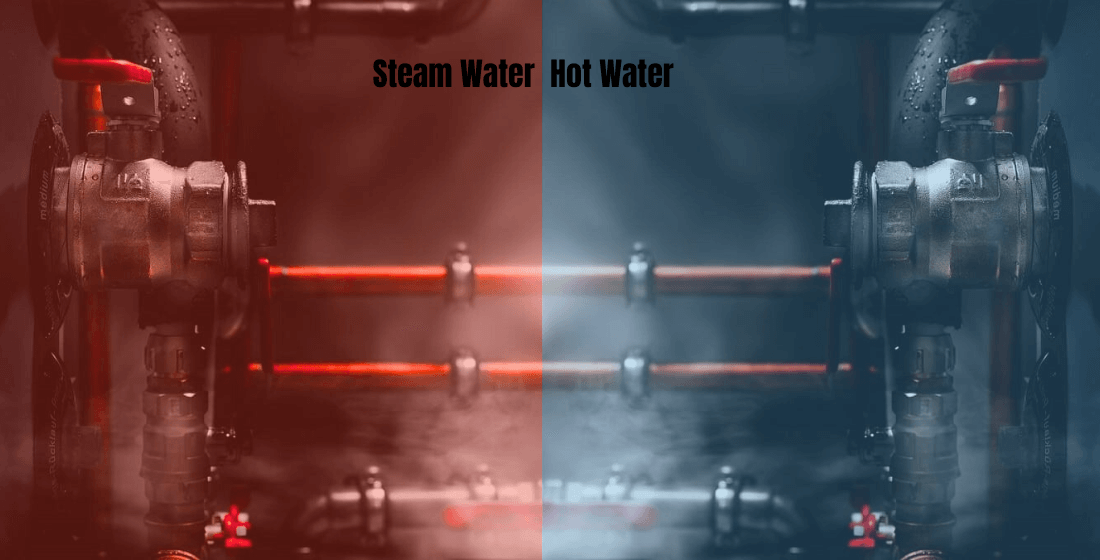
Steam to Hot Water Heating Systems: Retrofit & Conversion Guide
Steam heating systems remain common in older multifamily, commercial, and institutional buildings, particularly where the original heating infrastructure has been in place for decades.
While a properly maintained steam system can continue to operate reliably, aging equipment, limited controls, deteriorating piping, uneven heating, maintenance requirements, and changing building needs can lead owners to consider a transition to hot-water heating.
A steam to hot water heating system retrofit can provide greater control over temperature, zoning, pumping, equipment selection, and future heating technologies. However, transitioning from steam to hot water is not simply a matter of replacing one boiler with another.
The engineer must evaluate the entire heating system, including the building’s heating loads, distribution piping, radiators, mechanical space, controls, electrical requirements, building envelope, and operating conditions.
For some buildings, a complete conversion may be appropriate. For others, upgrading the existing steam system may provide better value.
The right decision should therefore begin with a technical assessment rather than a predetermined heating technology.
Why Building Owners Consider Moving From Steam to Hot Water
There are several reasons a building owner may consider replacing or modernizing a steam heating system.
Common drivers include:
-
Aging boilers
-
Deteriorating steam piping
-
Frequent maintenance
-
Poor temperature control
-
Uneven heating
-
Limited zoning
-
Outdated controls
-
High operating costs
-
Difficulty sourcing replacement components
-
Desire for improved energy performance
-
Future electrification plans
-
Building renovations
A transition to hot water can provide a more flexible platform for modern controls and heating technologies.
However, the potential benefits depend on the building and the proposed system.
How Steam and Hot Water Heating Systems Differ
The fundamental difference is how heat is distributed.
A steam system generates steam and distributes it through piping to radiators or other heating equipment.
A hot-water system heats water and uses pumps to circulate it through a closed-loop distribution system.
Steam System
Boiler → Steam → Distribution Piping → Radiators → Condensate
Hot-Water System
Heat Source → Hot Water → Pump → Supply Piping → Heating Terminals → Return Piping
This difference affects nearly every part of the retrofit.
The engineer must evaluate not only the heating source but also the distribution system and terminal equipment.
What Does Transitioning From Steam to Hot Water Involve?
A steam-to-hot-water transition can include:
-
Heating-load calculations
-
Boiler or heat-source replacement
-
Supply and return piping
-
Pumps
-
Expansion equipment
-
Air separation
-
Radiator modifications
-
New heating terminals
-
Control valves
-
Thermostats
-
Building automation
-
Electrical modifications
-
Mechanical-room modifications
-
Insulation
-
Commissioning
The actual scope depends on how much of the existing system can be retained.
Can Every Steam Heating System Be Converted to Hot Water?
No.
Many systems may be technically convertible, but feasibility depends on the building.
Important factors include:
-
Existing piping
-
Radiator condition
-
Radiator capacity
-
Building height
-
Heating loads
-
Mechanical-room space
-
Existing boiler
-
Building occupancy
-
Construction access
-
Existing utility capacity
-
Project budget
The first step should therefore be a feasibility assessment.
Evaluating the Existing Steam System
Before designing a new system, engineers should document the existing heating infrastructure.
The assessment can include:
-
Boiler type
-
Boiler capacity
-
Boiler age
-
Steam pressure
-
Distribution piping
-
Radiator types
-
Steam traps
-
Air vents
-
Controls
-
Mechanical-room conditions
-
Fuel source
-
Existing electrical service
Existing drawings should be reviewed where available, but field verification is especially important for older buildings.
Why Existing-Condition Verification Matters
Older buildings frequently contain undocumented modifications.
For example, the current building may differ from the original drawings because of:
-
Previous renovations
-
Piping modifications
-
Equipment replacements
-
Tenant improvements
-
Abandoned systems
-
Structural changes
Designing from inaccurate information can result in expensive redesign during construction.
A field survey should therefore be completed before finalizing the conversion strategy.
Evaluating the Building Heating Load
A heating-system transition should begin with the building’s actual heating requirements.
Engineers can evaluate:
-
Building area
-
Room-by-room heating loads
-
Occupancy
-
Building envelope
-
Window performance
-
Outdoor design conditions
-
Ventilation
-
Internal heat gains
This determines the capacity required from the new heating system.
Equipment should not simply be selected based on the capacity of the existing steam boiler.
Why Existing Boiler Capacity May Be Misleading
Older heating systems may have been oversized.
The existing boiler may therefore have significantly greater capacity than the building actually requires.
Simply selecting a hot-water boiler with the same nominal capacity could result in unnecessary oversizing.
Oversized equipment can increase:
-
Capital cost
-
Cycling
-
Energy consumption
-
Mechanical-space requirements
A new system should be sized based on calculated loads and actual operating requirements.
Evaluating Existing Steam Radiators
Radiators are a major consideration in a steam-to-hot-water transition.
An existing steam radiator may be physically reusable, but that does not automatically mean it can provide sufficient heat when operated with hot water.
Engineers should evaluate:
-
Radiator size
-
Heat-transfer area
-
Condition
-
Required room load
-
Proposed water temperature
-
Expected heat output
The relationship between water temperature and radiator capacity is particularly important if the proposed system is intended to operate at lower temperatures.
Can Existing Radiators Be Reused?
Sometimes.
Reusing existing radiators can reduce:
-
Material costs
-
Demolition
-
Architectural disruption
-
Installation time
But reuse is only appropriate when the radiator can provide the required output and operate safely under the proposed system conditions.
If it cannot, replacement or supplemental heating may be necessary.
Evaluating Existing Steam Piping
Piping is often one of the most significant considerations in a steam-to-hot-water retrofit.
Engineers should review:
-
Pipe material
-
Pipe diameter
-
Corrosion
-
Wall thickness
-
Existing connections
-
Routing
-
Insulation
-
Accessibility
-
Pressure requirements
A steam distribution system may not provide the supply-and-return arrangement required for a modern hydronic system.
Why New Hot-Water Piping May Be Required
Hot-water systems generally require:
-
Supply piping
-
Return piping
Steam systems may have a fundamentally different distribution arrangement.
Installing new piping can therefore involve substantial work through:
-
Walls
-
Ceilings
-
Shafts
-
Corridors
-
Mechanical rooms
-
Occupied areas
DOE research identifies piping retrofit cost and installation disruption as important considerations in steam-to-hot-water conversions. (energy.gov)
Building Height and Hydronic System Pressure
Building height becomes especially important in taller buildings.
Hot-water systems are pressurized, and static pressure increases as elevation increases.
The engineer must evaluate:
-
Static pressure
-
System pressure
-
Pump head
-
Equipment pressure ratings
-
Expansion tank sizing
-
Pressure-relief requirements
A tall multifamily building therefore requires different analysis from a small two-story building.
Choosing the New Heating Source
Once the heating load and distribution requirements are understood, the engineering team can evaluate the appropriate heat source.
Potential options include:
-
Hot-water boilers
-
High-efficiency boilers
-
Heat pumps
-
Heat exchangers
-
Hybrid systems
-
Other low-carbon heating technologies
The appropriate choice depends on:
-
Climate
-
Building load
-
Required water temperature
-
Fuel availability
-
Electrical capacity
-
Mechanical space
-
Project objectives
-
Lifecycle economics
Hot-Water Boiler Considerations
If a boiler-based system is selected, engineers should evaluate:
-
Heating capacity
-
Efficiency
-
Fuel type
-
Supply-water temperature
-
Return-water temperature
-
Boiler staging
-
Modulation
-
Redundancy
-
Venting
-
Combustion air
-
Service access
The boiler should be selected as part of the complete system rather than independently.
Can Heat Pumps Replace Steam Heating?
In some buildings, heat pumps can be part of the transition away from steam.
Potential options include:
-
Air-source heat pumps
-
Water-source heat pumps
-
Ground-source heat pumps
-
Heat-pump-driven hydronic systems
However, heat-pump feasibility depends heavily on the required heating-water temperature.
A building with high-temperature terminal requirements may require additional design measures.
DOE identifies heat pumps as an option for decarbonizing commercial HVAC and water-heating systems, while noting that feasibility depends on building and regional conditions. (betterbuildingssolutioncenter.energy.gov)
Why Heating-Water Temperature Matters
Heating-water temperature affects:
-
Radiator output
-
Coil capacity
-
Heat-pump performance
-
Boiler efficiency
-
Pumping
-
Distribution losses
Lower-temperature hydronic systems can create opportunities for improved efficiency and heat-pump integration.
However, the building’s existing heating terminals must be capable of delivering sufficient heat.
Low-Temperature Hydronic Heating
A low-temperature hot-water system operates at lower supply-water temperatures than many conventional boiler systems.
Potential benefits include:
-
Improved compatibility with heat pumps
-
Lower distribution temperatures
-
Improved boiler efficiency in appropriate systems
-
Reduced heat losses
-
More efficient operation
However, lower-temperature operation may require:
-
Larger radiators
-
Larger heating coils
-
Better building envelopes
-
Improved controls
The design should therefore start with the building load and terminal capacity.
Improving the Building Envelope Before Conversion
Heating-system upgrades should be considered alongside the building envelope.
Potential improvements include:
-
Insulation
-
Air sealing
-
Window upgrades
-
Weatherization
Reducing heat loss can reduce the required heating capacity.
DOE building guidance emphasizes addressing building loads as part of HVAC efficiency strategies. (energy.gov)
This can affect both equipment size and operating cost.
Designing the Hot-Water Distribution System
A hydronic distribution system typically includes:
-
Supply piping
-
Return piping
-
Circulation pumps
-
Control valves
-
Expansion equipment
-
Air separators
-
Strainers
-
Balancing devices
-
Insulation
The system should be designed to deliver the required flow to each heating zone.
Pump Selection and Hydronic Design
Pumps should be selected based on:
-
Required flow
-
System pressure drop
-
Pipe size
-
Control strategy
-
Operating schedule
Variable-speed pumping may be appropriate where the system is designed for variable flow.
Efficient pumping can help reduce electrical consumption and improve system control.
Expansion Tanks in Hot-Water Systems
Water expands as it is heated.
A closed-loop hydronic system therefore requires appropriate expansion management.
The design may include:
-
Expansion tank
-
Pressure controls
-
Relief devices
-
Air separation
Sizing should be based on system volume, operating temperatures, and pressure conditions.
Air Management in Hydronic Systems
Air can interfere with hydronic-system performance.
Potential problems include:
-
Noise
-
Reduced circulation
-
Corrosion
-
Poor heat transfer
-
Air locking
The system should therefore include appropriate:
-
Air separators
-
Automatic air vents
-
System fill arrangements
Zoning a Hot-Water Heating System
One potential advantage of hydronic heating is the ability to create multiple heating zones.
Zones can be based on:
-
Floor
-
Apartment
-
Orientation
-
Occupancy
-
Use
-
Operating schedule
Controls may include:
-
Thermostats
-
Zone valves
-
Pumps
-
Temperature sensors
Proper zoning can prevent the entire building from being heated to the same level when demand varies.
Outdoor-Air Reset
Outdoor-air reset adjusts the heating-water supply temperature according to outdoor conditions.
When outdoor conditions are mild, the system can reduce supply temperature.
When conditions become colder, the supply temperature can increase.
This can help reduce unnecessary high-temperature operation.
Boiler Staging and Modulation
Multiple boilers can be staged to match building demand.
Instead of operating one large boiler continuously, the system can sequence equipment according to heating requirements.
Modulating boilers can also adjust output within their operating range.
These strategies can improve part-load performance when properly designed.
Building Automation for Hot-Water Heating
A building automation system can monitor and control:
-
Supply temperature
-
Return temperature
-
Outdoor temperature
-
Pump speed
-
Boiler operation
-
Zone temperature
-
Heating schedules
-
Alarms
This provides building operators with greater visibility and control.
Electrical Requirements After a Steam-to-Hot-Water Retrofit
The transition can introduce new electrical loads.
These may include:
-
Pumps
-
Controls
-
Motors
-
Valves
-
Heat pumps
-
Electric auxiliary heating
-
Building automation
If the project includes electrification, the electrical impact can be substantial.
The electrical service should therefore be evaluated during early design.
Mechanical-Room Requirements
The new system may require different equipment and clearances from the existing steam plant.
Mechanical-room planning should accommodate:
-
Boilers
-
Pumps
-
Expansion tanks
-
Heat exchangers
-
Controls
-
Electrical equipment
-
Piping
-
Service clearances
Equipment must also be accessible for maintenance and eventual replacement.
Steam to Hot Water Conversion Cost Factors
There is no universal price for transitioning from steam to hot water.
The major cost factors can include:
-
Building size
-
Number of floors
-
Heating equipment
-
Piping
-
Radiators
-
Pumps
-
Controls
-
Electrical modifications
-
Mechanical-room work
-
Demolition
-
Hazardous-material abatement
-
Architectural restoration
-
Construction access
-
Occupied-building conditions
Piping is often a major cost driver because new supply and return distribution may need to be installed throughout the building.
Why Retrofit Cost Can Be Higher Than New Construction
New construction allows engineers to coordinate piping and equipment before walls and ceilings are built.
Retrofit projects must work around existing conditions.
This can require:
-
Demolition
-
Core drilling
-
Access openings
-
Ceiling removal
-
Wall restoration
-
Temporary heating
-
Phased construction
These factors can significantly increase labor and project duration.
How to Compare Retrofit Options
A building owner should compare more than initial construction cost.
Consider:
Initial Cost
Equipment, labor, piping, controls, demolition, and installation.
Energy Cost
Expected heating consumption under realistic operating conditions.
Maintenance
Routine service, repairs, pumps, controls, and water treatment.
Equipment Life
Expected replacement cycle.
Comfort
Temperature control and zoning.
Reliability
Redundancy and equipment availability.
Future Flexibility
Compatibility with future heating technologies.
Construction Disruption
Impact on occupants and building operations.
This is a lifecycle decision rather than simply an equipment purchase.
Does Converting to Hot Water Automatically Save Energy?
No.
This should be one of the most important points for building owners.
A hot-water system may provide opportunities for:
-
Better controls
-
Improved zoning
-
Efficient pumping
-
Modern boilers
-
Lower water temperatures
-
Heat-pump integration
But energy performance depends on the complete system.
DOE research has found that steam-to-hot-water conversions can involve significant retrofit costs and that energy savings vary by project. (energy.gov)
Steam System Upgrade vs. Full Hot-Water Conversion
A complete conversion is not always the best solution.
An owner could also consider modernizing the existing steam system.
Potential upgrades include:
-
Boiler replacement
-
Steam-pressure optimization
-
Thermostatic radiator valves
-
Steam-trap replacement
-
Improved insulation
-
Controls upgrades
-
Building automation
-
Distribution repairs
A feasibility study should compare these options against a full conversion.
When Steam System Modernization May Be Better
Maintaining steam may be more practical when:
-
Distribution piping is in good condition
-
Radiators are functional
-
Conversion would require extensive demolition
-
Occupant disruption must be minimized
-
Capital budget is limited
-
Existing steam performance can be improved
A modernized steam system can sometimes achieve meaningful improvements without replacing the entire distribution system.
When a Hot-Water Transition May Make More Sense
A transition may be more attractive when:
-
The steam plant is near the end of its useful life
-
Distribution piping requires replacement
-
Better zoning is needed
-
Controls are obsolete
-
The building is undergoing major renovation
-
Future heat-pump integration is desired
-
The existing system is difficult to maintain
Again, the decision should be based on engineering analysis.
Steam to Hot Water in Multifamily Buildings
Multifamily buildings introduce additional challenges.
Engineers may need to consider:
-
Apartment-level temperature control
-
Tenant access
-
Vertical risers
-
Existing radiators
-
Occupied conditions
-
Phased construction
-
Temporary heat
DOE research identifies resident disruption as a significant consideration in steam-to-hot-water conversions. (energy.gov)
Steam to Hot Water in Commercial Buildings
Commercial buildings can have different requirements depending on occupancy.
Examples include:
-
Offices
-
Retail
-
Hotels
-
Restaurants
-
Schools
-
Healthcare facilities
Operating schedules, occupancy, ventilation, and internal loads should be considered when calculating the new heating requirements.
Steam to Hot Water in Older Buildings
Older buildings often require additional investigation because of:
-
Aging piping
-
Limited drawings
-
Structural constraints
-
Hazardous materials
-
Older electrical systems
-
Limited mechanical space
A comprehensive existing-condition survey is particularly important before construction documents are developed.
Hazardous Materials During Heating System Retrofits
Older pipe insulation and mechanical-room materials may contain asbestos or other hazardous substances.
Before demolition or disturbance, appropriate environmental investigation should be completed.
If hazardous materials are identified, the project may require specialized:
-
Abatement
-
Worker protection
-
Disposal
-
Scheduling
This should be considered during budgeting and planning.
Temporary Heating During Construction
A building cannot simply lose its heating system during cold weather.
Occupied projects may therefore require temporary heating while the existing steam system is being removed or modified.
Temporary heating should be planned around:
-
Construction phasing
-
Weather
-
Occupancy
-
Equipment
-
Fuel
-
Electrical capacity
-
Safety
Minimizing Occupant Disruption
Heating-system work can affect occupied spaces.
Strategies may include:
-
Phased installation
-
Floor-by-floor work
-
Temporary heating
-
Advance communication
-
Coordinated access
-
Scheduled shutdowns
The construction strategy should be considered during engineering design.
Commissioning the New Hot-Water System
Commissioning verifies that the new system performs as intended.
The process may include:
-
Pump testing
-
Boiler testing
-
Flow verification
-
Temperature verification
-
Pressure testing
-
Control testing
-
Zone testing
-
Safety-device testing
-
Balancing
Commissioning is particularly important after a major conversion because multiple components have changed simultaneously.
Balancing a Hydronic Heating System
A hydronic system should provide appropriate flow to each zone.
Improper balancing can result in:
-
Uneven heating
-
Excessive pump operation
-
Noise
-
Poor comfort
-
Increased energy consumption
Balancing valves, control valves, differential-pressure measurements, and pump controls may all play a role.
Water Quality and Hydronic System Performance
Water quality can affect long-term system reliability.
Problems such as:
-
Corrosion
-
Scaling
-
Sediment
-
Fouling
can reduce performance or damage equipment.
The system should therefore have an appropriate water-treatment and maintenance strategy.
Designing for Maintenance
A heating-system upgrade should consider future maintenance from the beginning.
Provide adequate access to:
-
Boilers
-
Pumps
-
Valves
-
Filters
-
Controls
-
Expansion tanks
-
Heat exchangers
Equipment should also have practical replacement paths.
A system that performs well but is difficult to maintain may create unnecessary long-term costs.
Designing for Future Heating Technologies
A hydronic system can potentially serve as a platform for future heating technologies.
For example, an owner may initially install:
High-efficiency hot-water boilers
and later consider:
Heat pumps or hybrid systems.
The feasibility of that transition depends on:
-
Water temperature
-
Radiator capacity
-
Electrical infrastructure
-
Mechanical space
-
Building loads
Future planning should therefore be considered without unnecessarily overbuilding the current system.
Energy Modeling for Heating-System Transitions
Energy modeling can help compare heating strategies.
Possible scenarios include:
-
Existing steam
-
Modernized steam
-
Hot-water boiler
-
Heat pump
-
Hybrid system
The analysis can evaluate:
-
Energy consumption
-
Heating loads
-
Operating costs
-
Equipment sizing
-
Potential savings
DOE identifies building energy modeling as a useful tool for HVAC design, sizing, and evaluation of energy and cost impacts. (energy.gov)
Common Mistakes When Transitioning From Steam to Hot Water
Treating the Project as a Boiler Replacement
The entire distribution system must be evaluated.
Reusing Radiators Without Checking Capacity
Radiator output depends on operating conditions.
Assuming Existing Piping Is Suitable
Steam and hot-water systems have different distribution requirements.
Ignoring Building Height
Hydronic pressure must be evaluated carefully in tall buildings.
Oversizing the New Equipment
The new system should be based on calculated loads.
Ignoring Electrical Requirements
Pumps and heat pumps can introduce significant electrical loads.
Ignoring Controls
Modern equipment still requires appropriate control strategies.
Ignoring Occupant Disruption
Retrofit work can affect occupied spaces significantly.
Assuming Conversion Guarantees Energy Savings
Energy performance depends on the complete system.
Failing to Compare Alternatives
A modernized steam system may sometimes provide better value than full conversion.
Steam to Hot Water Retrofit Checklist
Before proceeding, evaluate:
Existing Heating System
-
Boiler
-
Steam pressure
-
Piping
-
Radiators
-
Steam traps
-
Controls
-
Mechanical room
Building
-
Heating loads
-
Building envelope
-
Building height
-
Occupancy
-
Mechanical space
-
Construction access
Proposed System
-
Heat source
-
Water temperature
-
Pumps
-
Supply piping
-
Return piping
-
Expansion equipment
-
Air management
-
Terminal equipment
Controls
-
Outdoor reset
-
Zone controls
-
Boiler staging
-
Pump modulation
-
Building automation
Electrical
-
Pump loads
-
Control loads
-
Heat-pump loads
-
Service capacity
Construction
-
Phasing
-
Temporary heating
-
Occupant access
-
Hazardous materials
-
Demolition
-
Restoration
Economics
-
Initial cost
-
Energy cost
-
Maintenance
-
Equipment life
-
Payback
-
Lifecycle cost
Step-by-Step Process for Transitioning From Steam to Hot Water
1. Survey the Existing System
Document the heating plant, distribution, terminals, controls, and mechanical space.
2. Verify Field Conditions
Confirm existing equipment and piping against available documentation.
3. Calculate Heating Loads
Determine actual room and building heating requirements.
4. Evaluate Existing Radiators
Determine whether they can provide adequate output with hot water.
5. Evaluate Existing Piping
Determine whether any distribution can be reused or modified.
6. Select the Heating Source
Compare boilers, heat pumps, hybrid systems, and other appropriate technologies.
7. Design the Hydronic Distribution
Develop piping, pumping, expansion, air management, and balancing.
8. Develop Controls
Design temperature control, zoning, staging, and automation.
9. Review Electrical Requirements
Evaluate additional electrical loads and service capacity.
10. Compare Lifecycle Costs
Consider capital, energy, maintenance, and replacement.
11. Develop Construction Phasing
Plan for occupied conditions and temporary heating.
12. Commission the System
Test, balance, and verify the completed installation.
How an MEP Engineer Supports a Steam-to-Hot-Water Retrofit
A qualified MEP engineering team can coordinate the various systems affected by the transition.
The engineering scope may include:
-
Heating-load calculations
-
HVAC design
-
Hydronic piping
-
Boiler selection
-
Heat-pump evaluation
-
Pump selection
-
Controls
-
Electrical coordination
-
Plumbing coordination
-
BIM
-
Energy modeling
-
Code compliance
-
Construction documentation
-
Commissioning support
This integrated approach is important because changing the heating system can affect multiple disciplines.
Choosing the Right Heating Strategy for an Existing Building
The decision to transition from steam to hot water should be based on the building’s actual conditions rather than on the assumption that one technology is always superior.
For some buildings, a complete hydronic conversion can provide greater control, easier zoning, modern equipment options, and a potential pathway toward lower-temperature heating or electrification.
For others, targeted steam-system upgrades may provide a more practical and cost-effective solution.
The most reliable way to determine the right approach is to evaluate the existing heating plant, distribution piping, radiators, building loads, mechanical space, electrical infrastructure, construction constraints, and lifecycle economics together.
A well-engineered transition should improve the building’s heating infrastructure without creating unnecessary cost, disruption, or system complexity.
Daymark Engineers provides MEP engineering, HVAC design, heating-system design, energy modeling, BIM coordination, value engineering, and building-system modernization services for commercial, multifamily, residential, and other building projects.
Considering a transition from steam to hot water? Contact Daymark Engineers to evaluate your existing heating system, compare retrofit options, and develop a heating strategy based on your building’s technical and operational requirements.
Frequently Asked Questions About Transitioning From Steam to Hot Water
Can a Steam Heating System Be Converted to Hot Water?
Many steam systems can potentially be converted, but feasibility depends on the existing piping, radiators, building height, heating loads, mechanical space, equipment condition, and project economics.
What Is Involved in Converting Steam to Hot Water?
A conversion may involve replacing or modifying the boiler, installing pumps and hot-water supply and return piping, evaluating radiators, adding expansion and air-management equipment, upgrading controls, and modifying electrical systems.
Can Existing Steam Radiators Be Reused?
Sometimes. Engineers need to verify the radiator’s condition and determine whether it can provide sufficient heating output at the proposed hot-water temperature.
Can Existing Steam Piping Be Reused?
It depends on the existing piping configuration, condition, size, material, routing, and suitability for a pressurized hydronic system. New supply and return piping may be required.
Is Converting Steam to Hot Water More Efficient?
It can create opportunities for improved efficiency through modern boilers, better controls, zoning, variable-speed pumping, and lower-temperature operation. However, conversion does not automatically guarantee energy savings.
Does a Steam to Hot Water Conversion Save Money?
It may reduce operating or maintenance costs in some buildings, but the financial outcome depends on the initial retrofit cost, energy use, equipment efficiency, maintenance, utility rates, and expected service life.
How Much Does It Cost to Convert Steam to Hot Water?
There is no universal cost. Major factors include piping, radiators, heating equipment, pumps, controls, electrical work, demolition, hazardous materials, mechanical-room modifications, and construction conditions.
Why Is Piping Such an Important Cost Factor?
A steam system and a pumped hot-water system may use different distribution arrangements. Installing new supply and return piping throughout an existing building can therefore require significant labor, demolition, and restoration.
Do You Need a New Boiler When Converting Steam to Hot Water?
Not necessarily. The existing boiler should be evaluated for capacity, pressure rating, condition, efficiency, and compatibility. A new hot-water boiler or another heat source may be more appropriate.
Can a Heat Pump Replace a Steam Boiler?
Potentially. Heat pumps can provide hydronic heating in suitable buildings, but required water temperature, terminal capacity, climate, electrical capacity, and building loads must be evaluated. (betterbuildingssolutioncenter.energy.gov)
Why Is Water Temperature Important When Switching From Steam?
Water temperature affects radiator and coil output, heat-pump efficiency, boiler performance, and distribution losses. Lower-temperature operation may require larger or upgraded heating terminals.
Can a Hydronic System Use Low-Temperature Water?
Yes, where the building’s heating terminals and loads allow it. Lower-temperature systems can also improve compatibility with some modern heating technologies.
Does a Hot-Water System Require Pumps?
Yes. Typical hydronic systems use pumps to circulate heated water through the building.
Can Variable-Speed Pumps Be Used?
Yes. Variable-speed pumps can adjust flow according to system demand when the hydronic system is designed for variable-flow operation.
Does Building Height Affect the Conversion?
Yes. Static pressure increases with building height, so taller buildings require careful evaluation of pressure, piping, pumps, expansion equipment, and equipment ratings.
Can Converting to Hot Water Improve Zoning?
Yes. Hydronic systems can be divided into zones using pumps, valves, thermostats, and controls, allowing heating output to respond to different areas of the building.
What Is Outdoor-Air Reset?
Outdoor-air reset adjusts hot-water supply temperature based on outdoor conditions. It can reduce unnecessary high-temperature operation during milder weather.
What Is Boiler Staging?
Boiler staging sequences multiple boilers according to heating demand. It can help match heating capacity to changing loads and improve part-load operation when properly designed.
What Controls Are Needed for a Modern Hot-Water Heating System?
Controls may include outdoor-temperature sensors, supply and return temperature sensors, thermostats, zone valves, pump controls, boiler modulation, staging, and building automation.
Can Building Automation Control the New Heating System?
Yes. Building automation can monitor and control temperatures, pumps, boilers, valves, schedules, alarms, and other system functions.
Does Converting From Steam to Hot Water Increase Electrical Demand?
It can. Hydronic systems require pumps, and electrification or heat pumps can significantly increase electrical demand. Electrical service should be evaluated during design.
Is Steam to Hot Water Conversion Practical in an Old Building?
It can be, but older buildings often require additional investigation of piping, hazardous materials, structural conditions, mechanical space, and undocumented modifications.
What About Asbestos in Old Steam Systems?
Older steam systems may contain asbestos-containing insulation or other hazardous materials. Suspected materials should be evaluated by qualified environmental professionals before demolition or disturbance.
How Can Occupant Disruption Be Reduced?
Phased construction, temporary heating, planned shutdowns, advance communication, and coordinated access can reduce disruption in occupied buildings.
Does a Hot-Water Conversion Require New Piping Throughout the Building?
Not necessarily, but many projects require new supply and return distribution. The extent depends on whether existing piping can be safely and practically reused or modified.
Should the Building Envelope Be Upgraded Before the Heating System?
It should at least be evaluated. Insulation, windows, and air sealing can reduce heating loads and may influence the required capacity of the new system.
Can Energy Modeling Help Decide Whether to Convert?
Yes. Energy modeling can compare existing and proposed heating strategies and help evaluate potential impacts on energy consumption, operating cost, and equipment sizing. (energy.gov)
Is It Better to Upgrade the Existing Steam System Instead?
Sometimes. Boiler replacement, improved controls, pressure optimization, radiator valves, insulation, and other steam-system upgrades may provide a better return than full conversion in certain buildings.
When Does a Hot-Water Conversion Make More Sense?
It may be worth considering when the steam plant is aging, piping requires major work, better zoning is needed, controls are outdated, the building is undergoing renovation, or future low-temperature or heat-pump heating is being considered.
How Long Does a Steam to Hot Water Retrofit Take?
The schedule varies based on building size, piping scope, occupancy, access, equipment replacement, permitting, hazardous-material requirements, and construction phasing.
What Should Be Evaluated Before Starting a Steam to Hot Water Retrofit?
Evaluate the existing boiler, piping, radiators, heating loads, building envelope, mechanical space, building height, electrical capacity, controls, construction access, hazardous materials, project cost, and long-term heating strategy.
Should an MEP Engineer Be Involved?
For commercial, multifamily, institutional, and other complex buildings, professional MEP engineering can help coordinate heating loads, hydronic distribution, equipment, controls, electrical requirements, code compliance, construction documentation, and lifecycle considerations.
No comment