
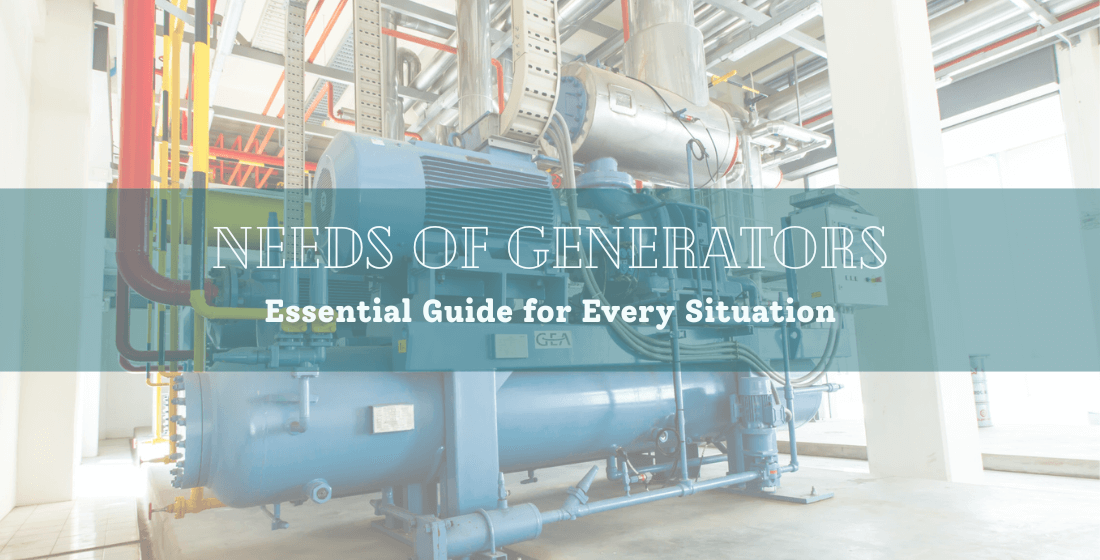
Commercial Backup Generators: Design, Sizing & Emergency Power Guide
A power outage can be an inconvenience for a small business, but for many commercial buildings, it can become a significant operational, financial, or safety risk.
Heating and cooling systems may shut down. Refrigeration can fail. Security systems may become unavailable. Elevators, pumps, fire and life-safety systems, communications equipment, medical equipment, and other critical loads may require continuous or emergency power.
A commercial backup generator can provide an alternative source of electrical power when normal utility service is interrupted.
However, selecting a generator is not simply a matter of choosing a unit with enough kilowatts.
A properly designed backup power system requires an evaluation of the building’s electrical loads, emergency requirements, transfer equipment, fuel supply, ventilation, installation location, controls, maintenance, and applicable codes and standards.
For emergency and standby power systems, NFPA 110 establishes classifications based on the consequences of system failure and requirements for alternate power to served loads.
The right generator therefore depends on what the building needs to keep operating, how long it needs backup power, how quickly power must be restored, and which loads are legally or operationally required to remain energized.
What Is a Commercial Backup Generator?
A commercial backup generator is an engine-driven electrical generating system designed to provide power when the normal utility source is unavailable.
A typical system may include:
-
Generator set
-
Engine
-
Alternator
-
Fuel system
-
Automatic transfer switch
-
Distribution equipment
-
Controls
-
Exhaust system
-
Cooling system
-
Starting system
-
Batteries
-
Monitoring equipment
The generator itself is only one component of the complete emergency or standby power system.
The supporting electrical and mechanical infrastructure is equally important.
When Does a Commercial Building Need a Backup Generator?
Not every building requires the same level of backup power.
A generator may be considered when a building has:
-
Critical life-safety systems
-
Emergency lighting
-
Fire protection equipment
-
Smoke-control systems
-
Medical equipment
-
Critical refrigeration
-
Data or communications infrastructure
-
Security systems
-
Elevator requirements
-
Sump or sewage pumps
-
Critical manufacturing equipment
-
Business-continuity requirements
-
Frequent or prolonged utility outages
Some applications may also be subject to specific code or regulatory requirements.
For example, NFPA 110 distinguishes Level 1 emergency power systems, where failure could result in loss of life or serious injury, from Level 2 systems where the consequences are less critical to life and safety.
The requirement therefore needs to be established based on the building type, occupancy, applicable codes, and critical loads.
Backup Generator vs. Emergency Generator
The terms are sometimes used interchangeably, but the design intent can differ.
Backup Generator
A backup generator may be installed primarily for business continuity or operational resilience.
Examples include:
-
Refrigeration
-
IT systems
-
Building operations
-
Security
-
Selected HVAC systems
Emergency Generator
An emergency generator may serve loads that are required to operate during an outage for life safety or code compliance.
Examples can include certain:
-
Emergency lighting
-
Fire alarm-related systems
-
Smoke-control equipment
-
Life-safety systems
-
Critical medical equipment
The actual requirements depend on the building and applicable codes.
This distinction matters because the required performance, transfer time, reliability, testing, and distribution can differ.
Standby Power vs. Emergency Power Systems
A building may have several categories of loads that need different levels of backup.
A practical approach is to classify loads according to:
Life-Safety Loads
Systems necessary to protect occupants.
Critical Operational Loads
Systems necessary for essential building functions.
Business-Continuity Loads
Systems that protect revenue, data, inventory, or operations.
Noncritical Loads
Systems that can remain offline during an outage.
This classification helps engineers determine which loads should be connected to the generator.
Why Generator Load Classification Matters
Connecting every building load to the generator can significantly increase:
-
Generator size
-
Fuel consumption
-
Electrical infrastructure
-
Installation cost
-
Maintenance requirements
Connecting too few loads can leave critical systems without adequate backup.
The engineering objective is therefore to identify the right loads, not simply the maximum possible load.
How to Determine What a Generator Should Power
Start by creating a load inventory.
Potential loads include:
-
Emergency lighting
-
Fire alarm
-
Fire pumps
-
Elevators
-
HVAC
-
Refrigeration
-
Pumps
-
Security
-
Access control
-
IT equipment
-
Communications
-
Medical equipment
-
Kitchen equipment
-
Process equipment
-
Plumbing systems
Each load should then be evaluated based on:
-
Required operation
-
Starting characteristics
-
Continuous demand
-
Emergency requirements
-
Operational priority
Generator Sizing for Commercial Buildings
Generator sizing is one of the most important parts of the design.
The generator needs enough capacity to:
-
Serve connected emergency loads
-
Handle starting loads
-
Accommodate appropriate operating conditions
-
Maintain acceptable voltage and frequency
-
Support the required sequence of operation
Simply adding the nameplate wattage of every device is not an adequate generator-sizing methodology.
Why Generator Load Calculations Matter
A generator load calculation can evaluate:
-
Connected load
-
Demand load
-
Motor loads
-
Starting currents
-
Largest motor
-
HVAC loads
-
Lighting
-
Receptacles
-
Equipment
-
Emergency loads
-
Future loads
The result helps determine the appropriate generator capacity.
An oversized generator can increase capital cost and may operate inefficiently at light load.
An undersized generator can overload, experience voltage or frequency problems, or fail to start large equipment.
Continuous Loads vs. Starting Loads
Generator sizing must distinguish between equipment that operates continuously and equipment that produces a large starting demand.
Motors can require significantly more current during startup than during normal operation.
Examples include:
-
Pumps
-
Fans
-
Compressors
-
HVAC equipment
-
Elevators
The generator must be able to handle the required starting sequence without unacceptable electrical disturbances.
Motor Starting and Generator Capacity
Motor-starting characteristics can significantly influence generator selection.
Engineers may evaluate:
-
Locked-rotor current
-
Starting method
-
Motor horsepower
-
Starting sequence
-
Voltage dip
-
Generator transient response
Possible strategies may include:
-
Sequential starting
-
Soft starters
-
Variable-frequency drives
-
Load sequencing
The appropriate strategy depends on the equipment and system design.
Generator Load Sequencing
Not every connected load needs to start simultaneously.
Load sequencing can allow the generator to bring systems online in stages.
For example:
Generator starts
↓
Emergency lighting
↓
Life-safety systems
↓
Critical HVAC
↓
Pumps
↓
Other priority loads
This can reduce instantaneous demand and help manage generator capacity.
Automatic Transfer Switches
An automatic transfer switch, or ATS, is a key component of a standby power system.
It monitors the normal power source and transfers designated loads to the generator when utility power is lost.
When normal power is restored, the system can transfer the loads back to the utility source according to the programmed sequence.
The ATS should be coordinated with:
-
Generator capacity
-
Distribution equipment
-
Emergency loads
-
Control systems
-
Required transfer time
Why Transfer Time Matters
Some loads can tolerate a short interruption.
Others cannot.
Critical systems may require rapid transfer to alternate power.
NFPA 110 establishes performance classifications for emergency and standby power systems, including requirements related to the time and duration of alternate power.
The required transfer performance therefore depends on the application.
Generator and Emergency Distribution
A generator does not automatically provide backup power to the entire building.
Emergency loads may be distributed through dedicated:
-
Emergency panels
-
Transfer switches
-
Feeders
-
Distribution equipment
This separation allows the engineering team to control which loads receive generator power.
The distribution arrangement must also comply with applicable electrical requirements.
How Generator Fuel Type Affects Design
Commercial generators may use different fuel sources, including:
-
Diesel
-
Natural gas
-
Propane
-
Other approved fuels
Fuel selection affects:
-
Generator location
-
Fuel storage
-
Runtime
-
Maintenance
-
Emissions
-
Utility availability
-
Local requirements
The best choice depends on the project.
Diesel Generators
Diesel generators are commonly used for applications requiring substantial backup capacity and extended operation.
Potential advantages include:
-
High power density
-
Established technology
-
Suitable fuel-storage options
-
Strong performance for larger systems
Design considerations include:
-
Fuel storage
-
Tank location
-
Fuel quality
-
Exhaust
-
Ventilation
-
Maintenance
-
Environmental requirements
Natural Gas Generators
Natural-gas generators can be attractive where a reliable gas supply is available.
Potential benefits include:
-
No on-site diesel fuel tank requirement in some installations
-
Convenient fuel supply
-
Reduced on-site fuel storage
However, engineers should evaluate whether the gas supply is sufficiently reliable during the events when backup power is most needed.
The appropriate fuel strategy depends on the building’s risk profile and local infrastructure.
Propane Generators
Propane can provide an alternative fuel source where appropriate.
Design considerations include:
-
Storage capacity
-
Tank location
-
Fuel delivery
-
Operating conditions
-
Local regulations
Fuel selection should be based on the project’s actual requirements rather than a generic preference.
How Long Should a Commercial Generator Run?
Required runtime depends on:
-
Building type
-
Emergency requirements
-
Expected outage duration
-
Fuel system
-
Available storage
-
Local requirements
-
Owner requirements
A generator should be designed around the required duration rather than an arbitrary runtime target.
For critical facilities, the required fuel capacity and system classification may be governed by applicable codes and standards.
Generator Location and Site Planning
Generator location affects both engineering and permitting.
Potential locations include:
-
Outdoor equipment yards
-
Rooftops
-
Parking areas
-
Dedicated generator rooms
-
Mechanical areas
The location should provide appropriate:
-
Ventilation
-
Exhaust clearance
-
Service access
-
Fuel access
-
Noise control
-
Fire protection
-
Structural support
-
Security
Outdoor Generator Installation
Outdoor installation can simplify some ventilation requirements but still requires careful planning.
Engineers should evaluate:
-
Exhaust discharge
-
Air intake
-
Cooling airflow
-
Weather protection
-
Equipment clearances
-
Fuel system
-
Noise
-
Maintenance access
The generator should be located so that exhaust gases cannot enter occupied spaces.
Indoor Generator Installation
Indoor generator installations require more extensive coordination.
The design may need to address:
-
Combustion air
-
Ventilation
-
Heat rejection
-
Exhaust
-
Fuel
-
Fire protection
-
Noise
-
Structural requirements
The generator room must be designed around the equipment manufacturer’s requirements and applicable codes.
Generator Exhaust Design
Generator engines produce exhaust gases that require safe discharge.
The exhaust system must be designed to:
-
Remove combustion products
-
Prevent re-entry into occupied spaces
-
Handle exhaust temperature
-
Accommodate thermal expansion
-
Maintain appropriate back pressure
-
Coordinate with building openings
Improper exhaust placement can create serious safety hazards.
Generator Ventilation and Cooling
Generators produce substantial heat.
Adequate airflow may be required for:
-
Combustion
-
Engine cooling
-
Radiator operation
-
Room heat removal
The ventilation system should be coordinated with the generator’s operating conditions and manufacturer requirements.
Carbon Monoxide Safety
Fuel-burning generators produce carbon monoxide.
Carbon monoxide is colorless and odorless and can cause severe poisoning or death.
OSHA warns that portable generators must not be used indoors or in enclosed spaces because of carbon-monoxide hazards. It also warns against placing generators near doors, windows, or vents where exhaust can enter a building.
For commercial installations, exhaust and ventilation design should therefore be treated as an engineering and life-safety issue rather than an afterthought.
Generator Electrical Grounding and Bonding
Generator systems require appropriate grounding and bonding.
The exact arrangement depends on:
-
Generator configuration
-
Transfer switch
-
System grounding
-
Distribution
-
Applicable electrical requirements
Incorrect grounding or bonding can create dangerous fault conditions.
This work should be designed and reviewed by qualified electrical professionals.
Generator and Utility Isolation
A generator must not unintentionally energize the utility system.
A properly designed transfer system isolates the building’s emergency source from the normal utility source as required.
OSHA specifically warns against directly connecting a generator to a building electrical system without a properly installed transfer switch because of the risk of energizing utility wiring and exposing workers to electrocution hazards.
Generator Installation Permits and Approvals
Permanent commercial generator installations may require coordination with:
-
Building authorities
-
Electrical authorities
-
Fire departments
-
Utilities
-
Environmental agencies
-
Local planning authorities
Requirements vary by jurisdiction and project type.
The engineering team should identify approval requirements early.
Generator Noise and Vibration
Generators can create:
-
Engine noise
-
Exhaust noise
-
Structural vibration
-
Low-frequency sound
Noise can become particularly important near:
-
Residential buildings
-
Hotels
-
Hospitals
-
Schools
-
Office buildings
-
Mixed-use developments
Potential strategies include:
-
Acoustic enclosures
-
Sound attenuators
-
Isolation mounts
-
Strategic equipment placement
-
Exhaust silencers
The solution must balance acoustic performance with cooling and ventilation requirements.
Generator Structural Requirements
Large generators are heavy pieces of equipment.
Structural engineers may need to evaluate:
-
Equipment weight
-
Dynamic loads
-
Vibration
-
Roof capacity
-
Equipment pads
-
Anchorage
-
Access routes
Rooftop generators require particularly careful coordination between structural, electrical, and mechanical disciplines.
Generator Fuel Storage
Fuel storage requirements depend on:
-
Fuel type
-
Required runtime
-
Generator size
-
Location
-
Local regulations
Diesel systems may require dedicated tanks, piping, leak protection, monitoring, and fuel-management strategies.
The fuel system should be designed as part of the overall emergency power system.
Generator Room Design
A generator room should provide adequate space for:
-
Generator equipment
-
Controls
-
Fuel systems
-
Exhaust
-
Ventilation
-
Maintenance
-
Replacement
Equipment should not simply be placed in the largest available room.
The layout should support safe operation and future service.
Generator Maintenance Access
Maintenance access should be considered before the generator is installed.
Technicians may need access to:
-
Filters
-
Batteries
-
Oil systems
-
Control panels
-
Fuel systems
-
Radiators
-
Exhaust components
Large components may eventually need replacement.
A generator room without a practical removal path can create major future problems.
Generator Testing and Maintenance
A standby generator is only useful if it starts and performs when required.
Maintenance may include:
-
Engine inspection
-
Oil and filter service
-
Battery inspection
-
Cooling-system inspection
-
Fuel-system inspection
-
Exhaust inspection
-
Control testing
-
Transfer-switch testing
-
Load testing
NFPA 110 materials include provisions for exercising generator sets and addressing loading during testing, reflecting the importance of maintaining emergency power systems in operational condition.
Generator Load Testing
Testing under load can verify that the generator performs under realistic operating conditions.
Testing may evaluate:
-
Voltage
-
Frequency
-
Load response
-
Engine performance
-
Cooling
-
Exhaust
-
Transfer operation
The testing program should follow applicable requirements, manufacturer recommendations, and the system’s classification.
Generator Redundancy
Some facilities may require more than one generator.
Redundancy can provide:
-
Greater reliability
-
Maintenance flexibility
-
Increased capacity
-
Reduced single-point-of-failure risk
The need for redundancy depends on:
-
Facility criticality
-
Code requirements
-
Owner requirements
-
Load profile
-
Risk tolerance
Not every building needs redundant generators.
Generators for Healthcare Facilities
Healthcare facilities can have some of the most demanding emergency-power requirements.
Critical loads may include:
-
Medical equipment
-
Patient-care areas
-
Emergency lighting
-
Life-safety systems
-
Medical gas systems
-
Ventilation
-
Pumps
-
Communications
-
Security
The exact requirements depend on the facility and applicable healthcare and electrical codes.
Generator design for healthcare therefore requires particularly careful load classification and emergency-power coordination.
Generators for Commercial Buildings
Commercial buildings may require backup power for:
-
Emergency lighting
-
Security
-
IT systems
-
Elevators
-
HVAC
-
Pumps
-
Refrigeration
-
Access control
-
Fire and life-safety systems
The system should be designed around the building’s actual operational priorities.
Generators for Restaurants
Restaurants can have significant electrical loads.
Potential critical equipment includes:
-
Refrigeration
-
Freezers
-
Kitchen exhaust
-
Make-up air
-
Lighting
-
Point-of-sale systems
-
Security
-
Fire protection
-
Selected cooking equipment
The generator does not necessarily need to power every appliance.
A load analysis can determine which equipment should be supported.
Generators for Retail Buildings
Retail facilities may prioritize:
-
Emergency lighting
-
Security
-
Refrigeration
-
Point-of-sale systems
-
Communications
-
Access control
The backup strategy should reflect the business’s operational requirements and applicable codes.
Generators for Multifamily Buildings
Multifamily buildings may need backup power for:
-
Emergency lighting
-
Fire alarm systems
-
Elevators
-
Pumps
-
Smoke-control systems
-
Selected common-area systems
-
Other required emergency loads
The engineering team should distinguish between legally required emergency loads and owner-selected convenience or business-continuity loads.
Generators for Data Centers and Critical IT Facilities
Data-intensive facilities have particularly stringent power-continuity requirements.
Generator systems may be coordinated with:
-
UPS systems
-
Automatic transfer switches
-
Power distribution
-
Cooling
-
Fire protection
-
Monitoring
Generators are typically one component of a larger power-continuity strategy.
Generators for Construction Sites
Temporary generators are commonly used where permanent utility power is unavailable.
Construction-site generator planning should consider:
-
Temporary distribution
-
Equipment loads
-
Grounding
-
Weather protection
-
Fuel
-
Cable routing
-
Worker safety
OSHA highlights shock, electrocution, carbon monoxide, fire, noise, and vibration as hazards associated with generator use.
Generator Sizing for HVAC Equipment
HVAC can represent a significant portion of a commercial building’s electrical load.
Engineers may need to evaluate:
-
Compressors
-
Fans
-
Pumps
-
Air-handling units
-
Chillers
-
Cooling towers
-
Heat pumps
Large motors can significantly affect generator sizing because of their starting characteristics.
Sequential starting or variable-frequency drives may help manage these loads where appropriate.
Generator Sizing for Fire Pumps
Fire pumps can create substantial electrical demand.
Where a fire pump is served by emergency power, the generator and electrical distribution system must be designed to accommodate the applicable fire-protection requirements.
Fire-pump loads should therefore be identified early in the generator load calculation.
Generator and Elevator Loads
Elevators can have significant starting and operating demands.
The engineering team should determine:
-
Which elevators require backup power
-
Required operating sequence
-
Motor characteristics
-
Transfer requirements
-
Emergency operation requirements
The elevator and generator designs should be coordinated.
Generator and Fire Alarm Systems
Fire alarm systems may require emergency or standby power based on applicable requirements.
The generator design should coordinate with:
-
Fire alarm
-
Emergency lighting
-
Fire pumps
-
Smoke control
-
Other life-safety systems
The exact requirements depend on building occupancy and governing codes.
Generator and Emergency Lighting
Emergency lighting is often one of the loads evaluated during emergency-power design.
Engineers should determine:
-
Which lighting circuits are emergency
-
Required duration
-
Transfer requirements
-
Distribution
-
Battery versus generator strategy
Not every lighting fixture necessarily needs generator power.
Generator and Plumbing Systems
Some plumbing systems can become critical during outages.
Examples include:
-
Sump pumps
-
Sewage ejector pumps
-
Domestic-water pumps
-
Booster pumps
-
Other critical pumping systems
The engineering team should determine which pumps need emergency or standby power.
Generator and Building Automation
Building automation can help monitor generator-related systems.
Potential points include:
-
Generator status
-
Fuel level
-
Alarms
-
Runtime
-
Transfer-switch status
-
Load
-
Voltage
-
Frequency
Monitoring can help facility operators identify problems before an outage occurs.
Generator and Renewable Energy Systems
Generators may also operate alongside:
-
Solar PV
-
Battery energy storage
-
Building automation
-
Microgrids
Integration requires careful electrical coordination.
A generator should not simply be connected to a renewable-energy system without evaluating:
-
Controls
-
Islanding
-
Protection
-
Load management
-
Synchronization
-
Utility requirements
Generator and Battery Energy Storage
Battery energy storage systems can provide another layer of backup or peak-demand management.
Depending on the project, batteries may:
-
Bridge short interruptions
-
Reduce generator startup impact
-
Support critical loads
-
Work alongside generators
The appropriate architecture depends on the building and required duration.
Microgrids and Generator Systems
A microgrid can integrate multiple power sources and loads into a coordinated system.
Possible components include:
-
Utility power
-
Generators
-
Solar
-
Battery storage
-
Controls
-
Critical loads
For facilities with complex resilience requirements, a microgrid may provide more flexibility than a standalone generator.
Generator Efficiency and Operating Load
Generators are designed to operate within particular load ranges.
Operating a generator continuously at very light load can create operational concerns, particularly for some diesel systems.
NFPA materials address generator exercising and minimum loading considerations for diesel generator sets.
Load management and generator selection should therefore consider both peak demand and expected operating conditions.
Generator Fuel Management
Fuel management is important for systems that may need to operate for extended periods.
Owners should consider:
-
Fuel capacity
-
Fuel quality
-
Storage conditions
-
Delivery access
-
Testing
-
Monitoring
-
Emergency refueling
The appropriate strategy depends on generator type and required runtime.
Generator Lifecycle Cost
Generator cost extends beyond the purchase price.
A lifecycle evaluation may include:
-
Equipment
-
Installation
-
Fuel system
-
Electrical distribution
-
Transfer switch
-
Ventilation
-
Exhaust
-
Fuel
-
Maintenance
-
Testing
-
Replacement
A cheaper generator may not necessarily be the lowest-cost solution over its service life.
Generator Installation Cost Factors
Project costs can vary based on:
-
Generator capacity
-
Fuel type
-
Equipment location
-
Electrical upgrades
-
Transfer switches
-
Fuel storage
-
Structural work
-
Exhaust
-
Ventilation
-
Acoustic treatment
-
Permits
-
Site work
Commercial installations should therefore be budgeted based on the complete system rather than generator purchase price alone.
Common Generator Design Mistakes
Choosing a Generator Based Only on Wattage
Generator sizing should consider demand, motor starting, sequencing, and required loads.
Connecting Every Building Load
This can unnecessarily increase generator capacity and cost.
Ignoring Motor Starting
Large motors can create significant starting demand.
Installing the Generator Without Considering Exhaust
Poor exhaust design can create serious health and safety risks.
Ignoring Ventilation
Generators require appropriate cooling and combustion air.
Forgetting Maintenance Access
Equipment needs to be serviceable after installation.
Ignoring Fuel Availability
A generator is only useful if it can operate for the required duration.
Treating Emergency and Business-Continuity Loads as the Same
Load classification helps determine what actually needs backup power.
Ignoring Transfer-Switch Requirements
The generator needs a properly designed transfer system.
Skipping Testing
A generator that has never been properly tested may not perform when required.
How to Select the Right Commercial Generator
A structured selection process can help.
Step 1: Identify the Building’s Risks
Determine what happens if utility power fails.
Step 2: Identify Critical Loads
Classify:
-
Life safety
-
Critical operations
-
Business continuity
-
Noncritical loads
Step 3: Calculate Electrical Loads
Evaluate:
-
Continuous loads
-
Demand
-
Motors
-
Starting loads
-
Future requirements
Step 4: Determine Required Runtime
Establish how long backup power needs to operate.
Step 5: Select the Fuel Strategy
Compare:
-
Diesel
-
Natural gas
-
Propane
-
Other applicable options
Step 6: Select Generator Capacity
Choose the generator based on calculated loads and starting requirements.
Step 7: Design the Transfer System
Coordinate:
-
ATS
-
Emergency panels
-
Distribution
-
Controls
Step 8: Plan the Installation Location
Evaluate:
-
Ventilation
-
Exhaust
-
Noise
-
Access
-
Structural requirements
-
Fuel
Step 9: Review Codes and Permits
Identify applicable requirements early.
Step 10: Plan Maintenance and Testing
Develop a strategy that keeps the system operational.
A Commercial Generator Design Checklist
Before finalizing a backup generator project, review:
Electrical
-
Generator capacity calculated
-
Emergency loads identified
-
Motor starting evaluated
-
Load sequencing evaluated
-
Transfer switches selected
-
Emergency distribution coordinated
-
Grounding and bonding reviewed
Mechanical
-
Ventilation designed
-
Exhaust designed
-
Cooling requirements addressed
-
Fuel system coordinated
-
Equipment access provided
Structural
-
Equipment weight reviewed
-
Foundation or pad designed
-
Anchorage coordinated
-
Vibration considered
Safety
-
Carbon monoxide risks addressed
-
Exhaust discharge reviewed
-
Fire protection coordinated
-
Fuel storage reviewed
-
Emergency access provided
Operations
-
Runtime established
-
Fuel strategy established
-
Maintenance access provided
-
Testing strategy established
-
Monitoring coordinated
Compliance
-
Applicable codes identified
-
Permits identified
-
Utility requirements reviewed
-
Authority requirements addressed
When Should Generator Design Begin?
Generator planning should begin during the early stages of building design or renovation.
Early coordination allows the project team to reserve space for:
-
Generator
-
Transfer switch
-
Electrical equipment
-
Fuel storage
-
Exhaust
-
Ventilation
-
Maintenance access
Waiting until the end of design can result in:
-
Insufficient space
-
Electrical redesign
-
Structural modifications
-
Exhaust conflicts
-
Higher costs
Generator design is therefore best treated as part of the overall MEP design process rather than as a late equipment-selection decision.
The Role of MEP Engineering in Generator Design
A commercial generator affects multiple building systems.
Electrical engineers may design:
-
Load calculations
-
Generator sizing
-
Transfer switches
-
Emergency distribution
-
Grounding
-
Protection
-
Controls
Mechanical engineers may coordinate:
-
Ventilation
-
Cooling
-
Exhaust
-
Fuel systems
-
Mechanical-room requirements
Structural engineers may address:
-
Equipment support
-
Foundations
-
Anchorage
-
Vibration
Architects may coordinate:
-
Equipment screening
-
Room layouts
-
Access
-
Building openings
-
Noise considerations
This makes generator design a multidisciplinary engineering task.
Why Generator Design Should Be Integrated With the MEP Plan
A generator should not be treated as an isolated piece of equipment.
Its design affects:
-
Electrical distribution
-
Mechanical systems
-
Structural design
-
Fire protection
-
Building layout
-
Site planning
-
Operations
Integrated design helps prevent conflicts and reduces the risk of costly modifications later.
Choosing the Right Backup Power Strategy
A generator is one option within a broader resilience strategy.
Depending on the building, the appropriate solution could include:
-
Standby generator
-
Emergency generator
-
UPS
-
Battery energy storage
-
Solar plus storage
-
Generator plus battery
-
Microgrid
-
Combination of multiple systems
The right solution depends on:
-
Critical loads
-
Required runtime
-
Transfer time
-
Building type
-
Budget
-
Site constraints
-
Regulatory requirements
-
Resilience goals
The goal is not simply to install the largest generator available.
It is to design a reliable and appropriately sized backup power system around the building’s actual needs.
Building a Reliable Commercial Backup Power System
A successful generator project begins with understanding the building rather than selecting equipment first.
The engineering team should identify which loads are critical, calculate their electrical demand, evaluate motor-starting requirements, determine required runtime, select the appropriate generator and fuel system, coordinate transfer equipment, and address ventilation, exhaust, structural support, maintenance, testing, and code requirements.
For critical facilities, emergency power design also needs to account for the applicable classification and performance requirements. NFPA 110 distinguishes Level 1 and Level 2 emergency power supply systems based on the consequences of system failure.
Safety must remain central to the design. Portable and temporary generator use presents hazards including electrocution, carbon monoxide exposure, fire, noise, and vibration, all of which OSHA identifies as generator-related hazards.
A properly engineered backup power system therefore provides more than electricity during an outage. It supports building resilience, occupant safety, operational continuity, and long-term reliability.
Daymark Engineers provides electrical engineering, MEP-FP engineering, BIM coordination, energy modeling, value engineering, peer review, and building-system design services for commercial, multifamily, healthcare, restaurant, retail, franchise, and other building projects.
Planning a new commercial building or upgrading an existing facility’s backup power system? Contact Daymark Engineers to evaluate your critical loads, generator requirements, electrical infrastructure, and emergency-power strategy.
Frequently Asked Questions About Commercial Backup Generators
What Is a Commercial Backup Generator?
A commercial backup generator is an engine-driven electrical generating system that supplies power when normal utility service is unavailable. It can support emergency, standby, operational, or business-continuity loads depending on the building and system design.
When Does a Commercial Building Need a Generator?
A generator may be required or recommended when a building has emergency or life-safety systems, critical equipment, operational continuity requirements, or significant outage risks. The actual requirement depends on the building type, occupancy, applicable codes, and owner requirements.
What Is the Difference Between an Emergency Generator and a Standby Generator?
Emergency systems generally serve loads associated with life safety or other code-driven requirements, while standby systems may also serve legally optional or operational loads. The exact classification and requirements depend on the application and applicable standards.
How Do You Size a Generator for a Commercial Building?
Generator sizing requires an electrical load analysis that considers connected and demand loads, motor starting, HVAC equipment, emergency loads, load sequencing, and other relevant operating conditions.
Can You Just Add Up All the Building’s Electrical Loads?
Not necessarily. Generator sizing requires consideration of demand, operating conditions, motor starting, load sequencing, and which loads actually require backup power.
Why Are Motor Starting Loads Important?
Large motors can draw substantially more current during startup than during normal operation. This can influence generator capacity and voltage performance.
What Equipment Should a Commercial Generator Power?
Potential loads include emergency lighting, fire protection, elevators, pumps, HVAC, refrigeration, security, IT systems, medical equipment, and other critical systems. The actual load list should be developed based on the building’s requirements and applicable codes.
Does a Generator Need an Automatic Transfer Switch?
A permanently installed standby or emergency generator typically requires a properly designed transfer arrangement to transfer designated loads between utility and generator power. The specific equipment depends on the system.
What Does an Automatic Transfer Switch Do?
An automatic transfer switch monitors the normal power source and transfers designated electrical loads to the alternate source when utility power is unavailable, then returns them to normal power when appropriate.
How Quickly Does a Generator Need to Start?
The required transfer performance depends on the type of emergency or standby system and the loads being served. Applicable standards such as NFPA 110 establish classifications and performance requirements.
How Long Can a Commercial Generator Run?
Runtime depends on generator size, fuel type, fuel-storage capacity, load, and project requirements. Critical facilities may have specific runtime requirements.
Which Fuel Is Best for a Commercial Generator?
Diesel, natural gas, propane, and other options may be appropriate depending on generator size, required runtime, fuel availability, site conditions, emissions considerations, and project requirements.
Are Diesel Generators Better Than Natural-Gas Generators?
Neither is universally better. Diesel may provide advantages for certain large or long-duration applications, while natural gas may be attractive where a reliable gas supply is available. The choice should be based on the project’s risk and operational requirements.
Where Should a Commercial Generator Be Installed?
Generators may be installed outdoors, on rooftops, or in dedicated indoor spaces depending on the project. The location must address exhaust, ventilation, cooling, fuel, noise, structural support, service access, and applicable requirements.
Can a Generator Be Installed Indoors?
Yes, some generator installations are designed for indoor locations, but indoor installations require careful engineering of combustion air, ventilation, cooling, exhaust, fuel, fire protection, and access.
Can a Generator Be Installed on a Roof?
Potentially. Rooftop installations require structural evaluation, equipment access, vibration control, fuel and exhaust coordination, and appropriate clearances.
Are Commercial Generators Noisy?
Generators produce engine, exhaust, and mechanical noise. Depending on the location, acoustic enclosures, silencers, isolation, or strategic placement may be required.
How Do You Prevent Generator Exhaust From Entering a Building?
Exhaust must be discharged and located so that combustion gases cannot enter occupied spaces through doors, windows, vents, or other openings. Portable generator safety guidance from OSHA specifically warns against placing generators near openings that could allow carbon monoxide into buildings.
Can a Generator Cause Carbon Monoxide Poisoning?
Yes. Fuel-burning generators produce carbon monoxide, which is colorless and odorless and can be fatal. OSHA advises that generators not be used indoors or in enclosed spaces and warns about exhaust entering buildings.
Does a Commercial Generator Need Ventilation?
Yes. Generator installations may require ventilation for combustion air, radiator cooling, and removal of heat from the equipment space. Requirements depend on the generator and installation.
Does a Commercial Generator Need Fuel Storage?
The answer depends on the fuel type and project requirements. Diesel generators, for example, may require dedicated fuel storage when extended runtime is needed.
How Often Should a Commercial Generator Be Tested?
Testing requirements depend on the system classification, applicable standards, manufacturer requirements, and jurisdiction. NFPA 110 materials include provisions for exercising generator sets and addressing appropriate loading during testing.
Why Is Generator Load Testing Important?
Load testing helps verify that the generator, engine, cooling system, electrical output, controls, and transfer equipment can perform under realistic operating conditions.
Does a Generator Need Regular Maintenance?
Yes. Maintenance can include engine service, oil and filter changes, battery inspection, cooling-system checks, fuel-system inspection, control testing, transfer-switch testing, and other manufacturer- and code-required procedures.
Can a Generator Power the Entire Building?
It can if the generator and distribution system are appropriately sized, but many commercial facilities intentionally connect only selected critical loads to reduce generator size and cost.
Should Every Building Load Be Connected to the Generator?
No. Load classification is important. Connecting unnecessary loads can increase generator capacity, fuel consumption, electrical infrastructure, and installation cost.
Can a Generator Power HVAC Equipment?
Yes, where the generator is appropriately sized and the HVAC equipment is included in the backup-power strategy. Motor starting and sequencing need to be evaluated.
Can a Generator Power a Fire Pump?
Potentially, and certain applications may require emergency power for fire-pump systems. The generator and electrical distribution must be designed to satisfy applicable fire-protection requirements.
Can a Generator Power Elevators?
Potentially. Elevator backup-power requirements depend on building type, applicable codes, elevator configuration, and emergency operation requirements.
Can a Generator Support a Healthcare Facility?
Yes, but healthcare facilities can have complex emergency-power requirements. Critical medical, life-safety, ventilation, communications, and other loads need to be classified and coordinated according to applicable healthcare and electrical requirements.
Do Multifamily Buildings Need Backup Generators?
Requirements vary. Multifamily buildings may need emergency power for systems such as emergency lighting, fire alarm, elevators, pumps, smoke-control systems, and other required equipment depending on the building and jurisdiction.
Can Restaurants Use Commercial Backup Generators?
Yes. Restaurants may use generators to support refrigeration, lighting, security, selected HVAC systems, point-of-sale equipment, and other critical loads. The load list should be based on operational priorities and applicable requirements.
Can a Generator Work With Solar Panels?
Potentially. Generator, solar PV, battery storage, and utility systems can be integrated, but the controls, protection, islanding, load management, and utility requirements must be carefully coordinated.
Can a Generator Work With Battery Energy Storage?
Yes. Batteries can potentially work alongside generators to provide short-duration backup, reduce generator starting impacts, or support a broader resilience strategy.
What Is a Microgrid?
A microgrid is a coordinated electrical system that can integrate multiple energy sources and loads, potentially including utility power, generators, solar, battery storage, and controls.
How Much Does a Commercial Generator Cost?
Cost depends on generator capacity, fuel type, installation location, transfer equipment, electrical distribution, fuel storage, exhaust, ventilation, structural work, acoustic treatment, permits, and site conditions. The generator purchase price is only one component of total project cost.
What Are the Most Common Commercial Generator Design Mistakes?
Common problems include improper sizing, ignoring motor starting, connecting unnecessary loads, inadequate ventilation, poor exhaust placement, insufficient maintenance access, inadequate fuel planning, improper transfer arrangements, and insufficient testing.
When Should Generator Design Begin?
Generator planning should begin during early building design or renovation so that space, electrical distribution, fuel systems, exhaust, ventilation, structural support, and maintenance access can be coordinated before the design is finalized.
Does Generator Design Require an Electrical Engineer?
For commercial and complex building applications, professional electrical engineering is typically important for load calculations, generator sizing, transfer equipment, emergency distribution, grounding, protection, and coordination with other building systems.
Does Generator Design Require Mechanical Engineering?
It can. Mechanical engineering may be required for generator ventilation, cooling, exhaust, fuel systems, mechanical-room planning, and coordination with HVAC and other building systems.
How Does BIM Help With Generator Design?
BIM can help coordinate generator equipment, electrical distribution, fuel systems, ventilation, exhaust, structural elements, and maintenance clearances within the building or site.
Can Daymark Engineers Design Commercial Generator Systems?
Daymark Engineers provides electrical and MEP-FP engineering services, including building-system design and coordination for commercial, multifamily, healthcare, restaurant, retail, franchise, and other projects.
No comment