
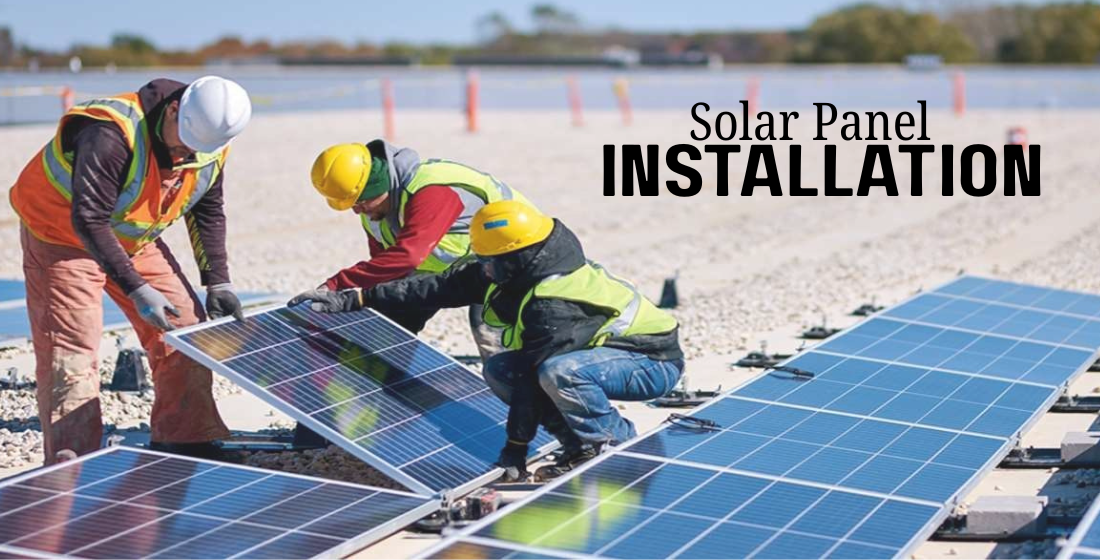
Solar Panel Installation in New York: Costs, Benefits, Incentives, and Design Considerations
Solar energy has become an increasingly important part of New York’s building and energy strategy. The state has continued expanding distributed solar capacity, reaching 8 gigawatts of installed distributed solar in 2026 and remaining on track toward its 10-gigawatt goal for 2030.
For property owners, developers, businesses, and building professionals, installing solar panels can provide an opportunity to reduce reliance on grid electricity, manage long-term energy costs, and support renewable-energy goals.
However, successful solar panel installation requires more than placing photovoltaic panels on a roof.
A viable project needs to consider the building’s energy demand, available roof or site area, structural capacity, solar exposure, electrical infrastructure, interconnection requirements, permitting, equipment selection, and financial incentives.
For New York projects, incentives can also vary according to project type, location, system size, and program availability. NYSERDA’s NY-Sun program currently provides incentives for residential, nonresidential, and larger commercial and industrial solar projects, with incentive levels organized by region and project sector.
This guide explains the major considerations for solar panel installation in New York, including benefits, costs, incentives, technical requirements, permitting, and the role of engineering in evaluating a solar project.
What Is Solar Panel Installation?
Solar panel installation involves designing and installing a photovoltaic (PV) system that converts sunlight into electricity.
A typical solar PV system can include:
-
Solar panels
-
Mounting systems
-
Inverters
-
Electrical wiring
-
Disconnects
-
Monitoring equipment
-
Utility interconnection equipment
-
Structural attachments or ballast
-
Optional battery storage
The system may be installed on:
-
Residential rooftops
-
Commercial rooftops
-
Multifamily buildings
-
Ground-mounted sites
-
Parking structures or canopies
-
Other suitable properties
The appropriate configuration depends on the site’s physical characteristics, electrical requirements, energy consumption, available solar resource, and project objectives.
Why Consider Solar Panels in New York?
Solar can provide several potential benefits for New York property owners.
Reduced Grid Electricity Consumption
A properly designed PV system can generate electricity on-site and reduce the amount of electricity purchased from the utility.
Long-Term Energy Planning
Solar can provide a predictable generation asset that may help a property owner manage long-term energy costs.
Renewable Energy Generation
Solar generates electricity without direct on-site combustion during operation.
Support for Sustainability Goals
Businesses, developers, municipalities, and building owners may use solar to support sustainability and emissions-reduction objectives.
Potential Financial Incentives
Eligible projects may qualify for state, federal, or local incentives depending on the project type and current program rules. NYSERDA currently identifies NY-Sun incentives, tax credits, and financing as potential components of solar project economics.
However, incentives should be treated as project-specific financial inputs, not guaranteed savings.
How Much Does Solar Panel Installation Cost in New York?
There is no single installation price that applies to every New York solar project.
The total project cost can depend on:
-
System size
-
Panel selection
-
Inverter technology
-
Roof type
-
Roof condition
-
Mounting system
-
Structural requirements
-
Electrical upgrades
-
Interconnection requirements
-
Site accessibility
-
Labor
-
Permitting
-
Engineering
-
Battery storage
-
Utility requirements
-
Project location
A small residential rooftop installation can have very different economics from a large commercial rooftop or ground-mounted system.
What Should Be Included in the Project Cost?
A complete solar budget should consider more than the panels.
Potential costs include:
-
PV modules
-
Inverters
-
Mounting equipment
-
Electrical equipment
-
Wiring
-
Structural work
-
Roof preparation
-
Engineering
-
Permitting
-
Interconnection
-
Labor
-
Monitoring
-
Commissioning
-
Battery storage, if applicable
-
Ongoing maintenance
For commercial projects, the electrical and structural scope can represent a significant portion of the overall investment.
This is why a preliminary feasibility assessment is useful before relying on a simple cost-per-panel estimate.
1. Evaluate the Building Before Designing the Solar System
The first step should be determining whether the building is suitable for solar.
A preliminary assessment should consider:
-
Roof area
-
Roof orientation
-
Roof slope
-
Roof condition
-
Shading
-
Structural capacity
-
Existing equipment
-
Electrical service
-
Utility connection
-
Available installation area
A large roof does not necessarily mean a large usable solar area.
Mechanical equipment, roof access, setbacks, fire-access requirements, skylights, parapets, drains, and other rooftop elements can reduce the area available for PV panels.
2. Assess Roof and Structural Capacity
Solar panels and their mounting systems add load to a building.
The structural implications depend on the mounting method.
Potential considerations include:
-
Panel weight
-
Racking weight
-
Ballast
-
Wind loads
-
Snow loads
-
Roof framing
-
Attachment points
-
Concentrated loads
In New York City, the Department of Buildings specifically requires a Professional Engineer or Registered Architect to verify that the building’s structural system can support solar equipment before installation.
New York City’s current building-code provisions also address roof structures supporting PV panels, including dead loads, concentrated support-frame loads, and applicable snow-drift effects.
Requirements outside New York City vary by jurisdiction, so the applicable local building requirements should always be verified.
3. Evaluate Solar Exposure and Shading
Solar panels need sufficient access to sunlight to produce electricity effectively.
Potential sources of shading include:
-
Adjacent buildings
-
Trees
-
Parapets
-
Rooftop equipment
-
Mechanical penthouses
-
Chimneys
-
Nearby structures
Shading can reduce system production, and its effect can vary throughout the day and year.
A solar feasibility assessment should therefore consider the site’s solar exposure rather than relying only on total roof area.
4. Determine the Appropriate Solar System Size
System size should be based on the property’s electricity consumption and project objectives.
Important inputs can include:
-
Historical electricity consumption
-
Utility rates
-
Peak demand
-
Operating schedule
-
Available installation area
-
Solar resource
-
Interconnection limitations
-
Desired energy offset
For a commercial property, the objective may not be to install the largest possible system.
Instead, the appropriate system may be the one that provides the best combination of:
-
Energy production
-
Available roof area
-
Capital cost
-
Utility compensation
-
Incentives
-
Project economics
5. Review the Building’s Electrical Infrastructure
A solar PV system connects to the building’s electrical system and ultimately to the utility grid for grid-connected installations.
The electrical assessment can include:
-
Existing service
-
Main distribution
-
Panels
-
Transformers
-
Voltage
-
Phase
-
Available capacity
-
Existing loads
-
PV output
-
Interconnection requirements
The existing electrical infrastructure may need modification depending on the proposed system.
This is particularly important for commercial and industrial properties with larger PV systems.
6. Understand Solar Interconnection Requirements
Grid-connected solar projects need to comply with the applicable utility interconnection process.
The requirements depend on:
-
Utility territory
-
System size
-
Customer type
-
Service configuration
-
Export arrangement
-
Interconnection method
New York’s distributed-energy framework also affects how energy exported to the grid may be compensated.
NYSERDA explains that projects below certain capacity thresholds may use Net Energy Metering or, depending on the project, the Value of Distributed Energy Resources (VDER) framework, while larger projects may use the Value Stack.
The applicable compensation structure should therefore be confirmed during project planning rather than assumed.
7. Understand NY-Sun Incentives
NY-Sun is one of the most important state programs to consider when evaluating solar installation in New York.
NYSERDA currently provides solar incentives across different regions and project categories. Incentive levels can vary according to:
-
Project location
-
Project size
-
Customer type
-
Program sector
-
Available incentive blocks
NYSERDA’s current incentive dashboard shows separate allocations for areas including Con Edison, Long Island, and Upstate New York.
For residential and smaller commercial projects, incentives may be provided through participating contractors. NYSERDA states that the exact incentive depends on project size and location.
Because NY-Sun incentives can change as program blocks are allocated, the current program status should be checked when the project is being evaluated.
8. Consider Federal Solar Tax Incentives
Federal incentives can also affect solar project economics.
For businesses, NYSERDA currently identifies the federal Solar Investment Tax Credit (ITC) as an important financing consideration and notes that the Inflation Reduction Act expanded opportunities for qualifying commercial solar projects.
Potential federal incentives can depend on:
-
Project ownership
-
Project type
-
Construction timing
-
Labor requirements
-
Domestic-content requirements
-
Energy-community eligibility
-
Low-income project eligibility
Because tax rules and eligibility can be complex, property owners should work with a qualified tax professional when determining the financial value of a federal incentive.
An engineering team can provide technical project information, but it should not replace tax advice.
9. Review New York State and Local Tax Benefits
New York also provides tax-related incentives that may apply to qualifying solar installations.
For example, NYSERDA currently identifies a New York State real-property-tax exemption for qualifying solar installations, while noting that local governments may have opted out of the exemption.
New York City has its own solar property-tax-abatement framework.
The applicability of these incentives depends on the project’s location and ownership structure.
Property owners should verify current eligibility with the relevant government agency and tax advisor.
10. Consider Battery Storage With Solar
Solar panels and battery storage are separate technologies, but they can be designed together.
Battery storage can potentially help:
-
Store excess solar generation
-
Shift energy use
-
Support peak-demand strategies
-
Provide backup power where properly configured
-
Increase the value of solar generation in certain applications
Whether storage is economically justified depends on:
-
Electricity rates
-
Demand charges
-
Load profile
-
Battery cost
-
Solar production
-
Utility rules
-
Backup-power requirements
A battery should therefore be evaluated based on the property’s actual electrical profile rather than automatically added to every solar installation.
11. Evaluate Solar for Commercial Buildings
Commercial solar projects can have different priorities from residential installations.
A business may be evaluating solar based on:
-
Electricity consumption
-
Demand charges
-
Operating schedule
-
Roof area
-
Utility rates
-
Tax benefits
-
Incentives
-
Capital budget
-
Return on investment
-
Sustainability goals
NYSERDA currently offers NY-Sun support for businesses and identifies commercial tax credits and financing as potential ways to improve solar project economics.
For larger commercial projects, the analysis should include the building’s electrical demand profile rather than looking only at annual electricity consumption.
12. Evaluate Solar for Multifamily Buildings
Multifamily properties can present additional considerations.
These may include:
-
Multiple utility accounts
-
Common-area loads
-
Tenant electricity consumption
-
Roof ownership
-
Shared electrical infrastructure
-
Community solar opportunities
-
Building structural conditions
-
Limited roof area
New York’s solar programs also include community solar options, allowing customers to participate in solar generation without installing panels directly on their own property.
The appropriate model depends on the building’s ownership and utility configuration.
13. Consider Solar Orientation and Panel Layout
The arrangement of PV panels can affect energy production.
Design considerations include:
-
Panel orientation
-
Tilt
-
Row spacing
-
Shading
-
Roof geometry
-
Access
-
Maintenance paths
-
Structural loading
-
Fire access
-
Equipment locations
The highest possible panel count is not always the best design.
A well-designed layout balances energy production with access, safety, structural requirements, and long-term maintainability.
14. Review Rooftop Equipment and Existing Building Systems
Commercial rooftops often contain:
-
HVAC equipment
-
Exhaust fans
-
Electrical equipment
-
Plumbing vents
-
Skylights
-
Roof drains
-
Access paths
-
Mechanical penthouses
Solar panels need to coexist with these systems.
The design should maintain appropriate:
-
Service access
-
Equipment clearances
-
Roof drainage
-
Maintenance paths
-
Safety access
This is one area where coordinated BIM modeling can provide significant value.
15. Consider Roof Replacement Before Solar Installation
Installing solar on a roof nearing the end of its service life can create a future maintenance problem.
If the roof needs replacement shortly after the PV system is installed, the solar array may need to be removed and reinstalled.
Before installation, evaluate:
-
Roof age
-
Remaining service life
-
Membrane condition
-
Warranty requirements
-
Penetrations
-
Flashing
-
Attachment methods
In some cases, addressing the roof first can be more practical than installing solar immediately.
16. Understand Solar Permitting Requirements
Solar installations are subject to permitting and inspection requirements that vary by jurisdiction.
In New York City, the Department of Buildings states that permits are required for building-connected solar energy systems and provides specific filing requirements for PV and solar hot-water installations.
NYC also requires inspections for permitted solar installations.
Outside NYC, requirements can differ between municipalities.
A project team should therefore identify the applicable permitting authority before construction begins.
17. Review Fire and Life-Safety Requirements
PV installations can affect building fire-safety considerations.
The design may need to address:
-
Roof access
-
Firefighter pathways
-
Equipment locations
-
Disconnects
-
Electrical safety
-
Panel layout
-
Required clearances
New York City requires rooftop PV installations to comply with applicable building and fire-code requirements.
The applicable requirements should be reviewed for the specific jurisdiction and building.
18. Use Energy Modeling to Evaluate Solar Performance
Energy modeling can help project teams evaluate the relationship between solar generation and building energy consumption.
Analysis can consider:
-
Annual electricity consumption
-
Solar production
-
Building load profile
-
Peak demand
-
HVAC consumption
-
Lighting
-
Equipment loads
-
Battery storage
-
Energy savings
This can help determine whether the proposed solar system is appropriately sized and how it interacts with the building’s broader energy strategy.
For commercial projects, this type of analysis can be more useful than simply calculating the number of panels that fit on the roof.
19. Calculate Solar Payback and Lifecycle Economics
Solar economics should be evaluated using the complete project investment.
A basic simple-payback calculation is:
Simple Payback = Net Project Cost ÷ Annual Financial Benefit
The annual benefit may include:
-
Avoided electricity purchases
-
Export compensation
-
Applicable incentives
-
Other project-specific savings
The net project cost may include:
-
Equipment
-
Installation
-
Engineering
-
Permitting
-
Structural work
-
Electrical upgrades
-
Interconnection
-
Financing costs where applicable
For larger projects, a more detailed lifecycle financial analysis should consider:
-
System degradation
-
Maintenance
-
Financing
-
Incentive timing
-
Electricity-price changes
-
Replacement costs
-
Tax treatment
-
Discount rate
The financial analysis should be based on project-specific assumptions.
20. What Is the Return on Investment for Solar in New York?
There is no universal solar ROI for every New York property.
The financial return depends on:
-
System cost
-
Energy production
-
Electricity rates
-
Building consumption
-
Incentives
-
Tax treatment
-
Utility compensation
-
Financing
-
Roof condition
-
Maintenance
-
System life
For commercial projects, the value of exported electricity can also depend on the applicable compensation mechanism.
NYSERDA’s Value Stack compensates eligible distributed-energy resources based on factors such as energy, capacity, environmental value, demand reduction, and location.
Therefore, solar ROI should be calculated using the property’s actual utility and project conditions.
21. When Is Solar a Good Option for a New York Building?
Solar may be particularly worth evaluating when a property has:
-
Significant electricity consumption
-
Suitable roof or ground area
-
Good solar exposure
-
Adequate structural capacity
-
Sufficient electrical infrastructure
-
Long-term ownership or occupancy
-
Favorable utility economics
-
Access to applicable incentives
A project may be less attractive if the building has:
-
A shaded roof
-
Limited usable area
-
Significant structural constraints
-
A roof nearing replacement
-
Low electricity consumption
-
Complex interconnection requirements
-
Short ownership horizon
The correct answer requires project-specific analysis.
22. A Practical Solar Installation Process in New York
A typical project can follow these stages.
Step 1: Evaluate the Site
Review roof area, orientation, shading, structural conditions, and existing building systems.
Step 2: Review Energy Consumption
Analyze historical electricity use and utility bills.
Step 3: Determine Solar Capacity
Estimate an appropriate system size based on energy demand and available installation area.
Step 4: Perform Structural Evaluation
Confirm that the building can support the proposed PV system and mounting configuration.
Step 5: Review Electrical Infrastructure
Evaluate service capacity, distribution, equipment, and interconnection requirements.
Step 6: Develop the Solar Layout
Coordinate panels, inverters, wiring, access, equipment, and roof conditions.
Step 7: Evaluate Incentives
Review current NY-Sun incentives and applicable state, federal, and local programs.
Step 8: Analyze Project Economics
Compare project cost, energy savings, incentives, financing, and expected payback.
Step 9: Complete Engineering and Permitting
Prepare the required technical documentation and coordinate with the applicable authorities.
Step 10: Install and Inspect
Install the system according to the approved design and complete required inspections.
Step 11: Commission the System
Verify that the PV system and associated electrical equipment operate as intended.
Step 12: Monitor Performance
Track energy production and system performance after installation.
Common Solar Installation Mistakes to Avoid
Installing Solar Without Checking the Roof
A structurally unsuitable or aging roof can create additional costs later.
Designing Around Roof Area Alone
Usable solar area is often smaller than the total roof footprint.
Ignoring Electrical Capacity
The building’s existing electrical infrastructure needs to be evaluated before finalizing the PV system.
Assuming Incentives Are Guaranteed
NY-Sun incentives and other programs have eligibility rules, regional allocations, and program changes. Current availability should be verified at the time of project planning.
Using Generic Solar ROI Estimates
Solar economics vary by building, utility, system size, and project financing.
Ignoring Maintenance Access
Panels and associated equipment need to remain accessible for inspection and maintenance.
Installing Solar on a Roof Near Replacement
Future roof work can require removal and reinstallation of the PV system.
Treating Solar as a Standalone System
Solar affects structural, electrical, architectural, fire-safety, and potentially energy-modeling considerations.
Why Engineering Matters for Solar Panel Installation
Solar installation is often described as a straightforward renewable-energy upgrade, but larger or more complex projects involve multiple building systems.
Engineering can help evaluate:
-
Structural capacity
-
Electrical infrastructure
-
PV system configuration
-
Equipment selection
-
Roof conditions
-
Energy performance
-
Interconnection
-
Code requirements
-
Coordination
-
Construction documentation
For commercial and multifamily properties, this multidisciplinary approach becomes particularly important.
BIM can also help coordinate PV equipment with existing rooftop mechanical and electrical systems.
Solar Panel Installation for Commercial Buildings
Commercial solar projects require a broader evaluation because system size, electrical demand, roof conditions, utility requirements, and financial considerations can be substantially different from residential installations.
A commercial solar feasibility study should consider:
-
Building energy consumption
-
Utility rate structure
-
Demand charges
-
Roof area
-
Structural capacity
-
Electrical service
-
PV system size
-
Interconnection
-
Incentives
-
Tax treatment
-
Financing
-
Expected energy production
NYSERDA’s current NY-Sun program includes incentives for commercial and industrial projects, with program structure varying by region and project size.
Solar Panels and New York’s Energy Future
New York continues to expand distributed solar as part of its broader clean-energy strategy. NYSERDA reported in July 2026 that the state had reached 8 GW of distributed solar capacity and was ahead of schedule toward its 10 GW target for 2030.
For property owners, this growth means solar can be worth evaluating as part of a broader building-energy strategy.
However, the right solar project is not necessarily the largest system that can fit on a roof.
The most effective approach considers:
Solar resource + Building load + Roof condition + Structural capacity + Electrical infrastructure + Incentives + Utility compensation + Lifecycle economics
Planning a Solar Project in New York
Solar panel installation can offer meaningful energy and financial benefits, but successful projects begin with a thorough evaluation of the property.
Before installation, property owners and project teams should understand whether the roof can support the system, whether the electrical infrastructure can accommodate it, how much electricity the system can realistically generate, what permits are required, and which incentives are currently available.
New York’s incentive environment can change, so current program requirements should be verified when a project is being developed rather than relying on outdated incentive figures.
For commercial, multifamily, and complex building projects, engineering can help connect the solar system to the building’s structural, electrical, mechanical, and energy-performance requirements.
Daymark Engineers provides MEP-FP engineering, energy modeling, BIM services, value engineering, peer review, drafting, and related building-engineering services that can support coordinated energy and building-system projects.
Planning a solar installation for a commercial or multifamily property in New York? Contact Daymark Engineers to discuss your project’s engineering and feasibility requirements.
Frequently Asked Questions About Solar Panel Installation in New York
How Much Does Solar Panel Installation Cost in New York?
Solar installation costs vary significantly based on system size, equipment, roof conditions, structural requirements, electrical upgrades, labor, permitting, interconnection, and whether battery storage is included. A project-specific estimate is more reliable than a generic statewide price.
Are There Solar Incentives in New York?
Yes. NYSERDA’s NY-Sun program provides incentives for eligible solar projects, with current incentive structures varying by location, project size, and project category.
What Is NY-Sun?
NY-Sun is New York State’s solar incentive program administered by NYSERDA. It supports solar development for homes, businesses, multifamily buildings, communities, and other eligible projects.
Can Businesses Get Solar Incentives in New York?
Eligible businesses may qualify for NY-Sun incentives and other state or federal financial benefits. The exact incentives depend on project characteristics, location, size, ownership, and current program rules.
Does New York Offer a Solar Tax Credit?
New York has tax-related incentives for qualifying solar installations, but eligibility varies by property type, location, ownership, and current tax rules. NYSERDA currently identifies a New York State residential solar tax credit and real-property-tax exemptions among available programs.
Is Solar Worth It in New York?
Solar can be financially attractive for properties with suitable solar exposure, sufficient electricity consumption, appropriate roof conditions, and favorable project economics. The return depends on system cost, energy production, utility rates, incentives, financing, and other project-specific factors.
Does a Roof Need to Be Structurally Evaluated Before Solar Installation?
The structural requirements depend on the project and jurisdiction. In New York City, the Department of Buildings specifically requires a Professional Engineer or Registered Architect to verify that the building can support solar equipment.
Do Solar Panels Require Permits in New York?
Permitting requirements vary by jurisdiction. In New York City, building-connected solar energy systems require permits, and the Department of Buildings provides specific filing and inspection requirements for solar installations.
Can Solar Panels Be Installed on a Commercial Building?
Yes. Commercial rooftops, ground-mounted sites, and other suitable properties can support solar installations when structural, electrical, zoning, permitting, utility, and financial requirements are satisfied.
Can Solar Panels Be Installed on an Old Roof?
Potentially, but the roof’s condition and remaining service life should be evaluated before installation. If a roof requires replacement soon, completing the roof work before installing solar may avoid future removal and reinstallation costs.
Does Solar Increase a Building’s Electrical Capacity?
Solar generates electricity but does not automatically increase the building’s utility-service capacity. The PV system and electrical infrastructure need to be evaluated together, including the proposed point of interconnection and applicable utility requirements.
What Is the Value Stack in New York?
The Value of Distributed Energy Resources, commonly called the Value Stack, is a New York compensation mechanism for eligible distributed energy resources. It can compensate projects based on factors including energy, capacity, environmental value, demand reduction, and location.
Should Battery Storage Be Added to a Solar System?
Not necessarily. Battery storage can provide additional benefits in certain applications, but its economic value depends on electricity rates, demand charges, load profile, solar production, backup-power objectives, and battery costs.
How Long Does Solar Installation Take?
Project timelines vary depending on system size, engineering, permitting, utility interconnection, roof conditions, equipment availability, and jurisdiction. Commercial projects can require significantly more planning than straightforward residential installations.
Should an Engineer Be Involved in a Commercial Solar Project?
Engineering can be particularly valuable for commercial and multifamily projects because solar installation can affect structural systems, electrical infrastructure, rooftop equipment, energy performance, fire safety, and building coordination.
No comment